The High-LTV Growth Marketing Game: Why Losing Money on the First Order Can Be the Right Move
If you sell supplements, skincare, coffee, pet food, or another product customers buy over and over again, you're playing a very specific growth marketing game.
At Free to Grow CFO, we call it the High-LTV Growth Marketing Game.
And the scaling rules are very different from a business that depends heavily on making money from the first purchase.
A High-LTV brand can afford to acquire a customer at a loss.
In many cases, it should.
But there's a big difference between intentionally losing money on the first order because you know exactly when you'll earn it back - and simply accepting bad first-order economics because "our LTV is strong."
One is a growth strategy.
The other is a great way to scale yourself into a cash crunch.
First, Understand the Game You're Playing
Our Proprietary FTG Growth Marketing Game framework starts with four questions:
What growth marketing game are you playing?
What is the first-order profitability rule for that game?
What is the primary scaling constraint?
What playbook options are available to you?
For High-LTV brands, the answers are pretty clear.
These businesses have enough repeat-purchase velocity to support CAC payback within roughly three to six months, with three to four months being ideal.
The important word there is velocity.
It's not enough to tell me a customer is worth $500 over their lifetime.
When do you actually get the $500?
If enough contribution margin comes back to you in months two, three, and four to recover what you spent acquiring that customer, you have a very different business than one where the same LTV takes two years to materialize.
That changes how aggressively you can acquire customers at a loss.
Your First-Order Profitability Rule: A Controlled Loss
For a High-LTV brand, the goal isn't necessarily to make money on the first order.
The goal is to take a controlled first-order loss.
Let's say you acquire a customer today and lose $20 after product costs, fulfillment, credit card fees and advertising.
That might be a fantastic customer.
If your cohort data tells you that you're highly likely to recover that $20 and reach breakeven by month three or four, the first-order loss isn't necessarily a problem.
It may actually be evidence that you're investing aggressively enough in growth.
But the word “controlled” matters.
You need to know how much you're willing to lose, how quickly you expect to earn it back, and what happens to that payback period as you increase spend.
Because that's where this game starts to get dangerous.
The Scaling Constraint: Your CAC Payback Window Expands
Every growth marketing game has something that eventually prevents you from scaling the exact same strategy forever.
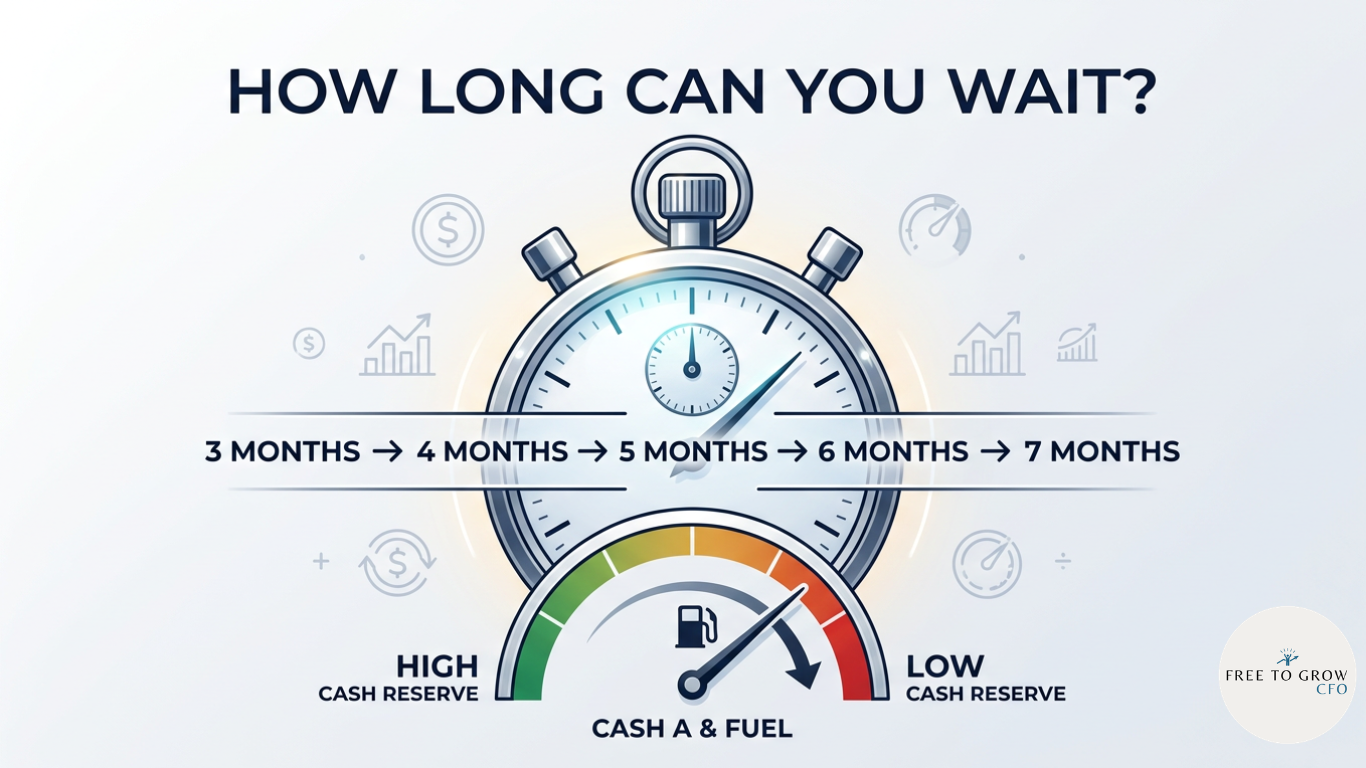
For High-LTV brands, the primary constraint is usually CAC payback window expansion.
Imagine your business is paying back CAC in three months.
You increase Meta spend.
CAC rises.
Now you're paying back CAC in four months.
Then five.
Then six.
Maybe seven.
Your LTV may still look great on paper. Your revenue may still be growing. Your customer count may be increasing.
But you're tying up more and more cash for longer and longer periods of time.
That's the constraint.
The question isn't simply:
Is this customer profitable?
It's:
How long do we have to float the acquisition cost before this customer becomes profitable - and can our balance sheet support that?
There are circumstances where allowing the payback window to expand makes perfect sense.
But that should be a conscious financial decision, not something you discover after the cash is gone.
The High-LTV Playbook
Once you understand the first-order profitability rule and the constraint, you can start playing the game correctly.
Here are some of the most important pieces.
1. Never Run Out of Subscription Inventory
For a subscription-heavy brand, running out of inventory isn't just an inventory problem.
It can break the retention engine your entire acquisition model depends on.
Your CAC economics work because customers continue purchasing.
If you can't fulfill those purchases, the LTV you modeled doesn't materialize.
The good news is that a brand with strong monthly retention and a healthy subscriber base can generally afford to be more aggressive with subscription inventory levels.
Why?
Because you're not relying entirely on future new-customer demand to draw that inventory down.
You already have a subscriber base waiting to consume it.
For High-LTV brands, I'd rather see a thoughtful bias toward protecting subscription inventory levels than risk starving the retention engine that makes the entire model work.
2. Model LTV in Contribution Margin Dollars - Not Revenue
This is one of the most important distinctions in the entire framework.
Revenue LTV isn't what pays back CAC.
Contribution margin does.
Your cohort model should show how much contribution margin each customer cohort generates by month and compare that directly against the CAC required to acquire that cohort.
And you need enough history to understand the pattern.
At minimum, look at the last 12 months of cohorts. Depending on the business and the data available, we may want to look back 24 or even 36 months.
The goal is to see exactly how quickly the economics mature.
When does month-one CAC get paid back?
How does that change by cohort?
And most importantly:
What happens to the curve as you scale spend?
3. Go Below the Blended Average
Blended numbers can hide some of the most valuable information in the business.
If possible, analyze CAC payback at the SKU and offer level.
You may discover that customers acquired through one subscription offer have completely different economics from customers acquired through another.
You should also segment subscribers from non-subscribers.
Those cohorts can behave very differently.
This is where a CFO-level cohort model starts becoming incredibly useful.
You're no longer asking whether "LTV is good."
You're identifying which customers, products, and offers produce the LTV velocity that allows you to scale.
That is a much more actionable question.
4. If You Sell on Amazon and Shopify, Build a Combined Cohort Model
This is one of the more advanced - and more overlooked - pieces of the High-LTV game.
Suppose you're spending heavily on Meta to generate awareness.
A customer sees an ad, learns about your brand, and then buys on Amazon instead of Shopify.
Where should that customer acquisition value show up?
If you're analyzing Shopify and Amazon independently, the answer gets messy.
Meta spend may appear to be generating insufficient Shopify profit even though some of the customers influenced by that spend are converting and repurchasing on Amazon.
That's cross-channel bleed.
And if you don't account for it, you can reach the wrong conclusion about whether a channel is profitable.
For brands with meaningful sales across Shopify and Amazon, we often want to see a combined e-commerce cohort model that brings CAC, new-customer sales, and subsequent contribution margin together across channels.
Otherwise, you risk cutting spend on something that's actually working.
The High-LTV Game Is Ultimately a Cash-Flow Game
This is what founders sometimes miss.
High LTV doesn't automatically make a business financially healthy.
High-LTV velocity combined with disciplined CAC management does.
The faster contribution margin comes back, the more confidently you can tolerate a first-order loss.
The longer CAC payback stretches, the more working capital you're required to float.
That's why this game can't be managed by looking at ROAS, revenue growth, or total LTV in isolation.
You need to understand the relationship between:
CAC
First-order contribution margin
Cohort-level contribution margin
Retention
CAC payback period
Inventory
Cash
Those numbers tell one story.
And when you understand that story, you can make a much more informed decision about how aggressively to scale.
Know the Game. Then Scale It Aggressively.
The goal of our FTG Growth Marketing Game framework isn’t to make brands more conservative.
It’s to give founders the financial clarity to scale faster — without sacrificing profit or cash.
For a High-LTV brand, that may mean intentionally accepting a first-order loss.
It may mean carrying more subscription inventory.
It may mean increasing ad spend even as CAC rises.
But every one of those decisions needs to happen within the financial constraints of the game.
That’s where Free to Grow CFO comes in.
We provide fractional CFO and bookkeeping services designed to help DTC brands scale from $10M to $50M+ — fast, profitably, and with a strong cash position.
And we’re the only fractional CFO firm with a proprietary DTC Growth Marketing framework built to tell you how aggressively you can scale ad spend at every stage.
Because scaling quickly is only valuable if the economics underneath the growth are working.
For High-LTV brands, that means knowing exactly how much you can afford to lose on the first order, how quickly you need to earn it back, and how far your CAC payback window can stretch before growth starts putting pressure on cash.
That’s the difference between simply growing revenue and building a brand that is:
Fast. Profitable. Cash Rich.
If you’re running a High-LTV DTC brand and want to know how aggressively you can scale your next dollar of ad spend, reach out to us at Free to Grow CFO.