Why Most Amazon Sellers Stay Broke (Even When They're Profitable)
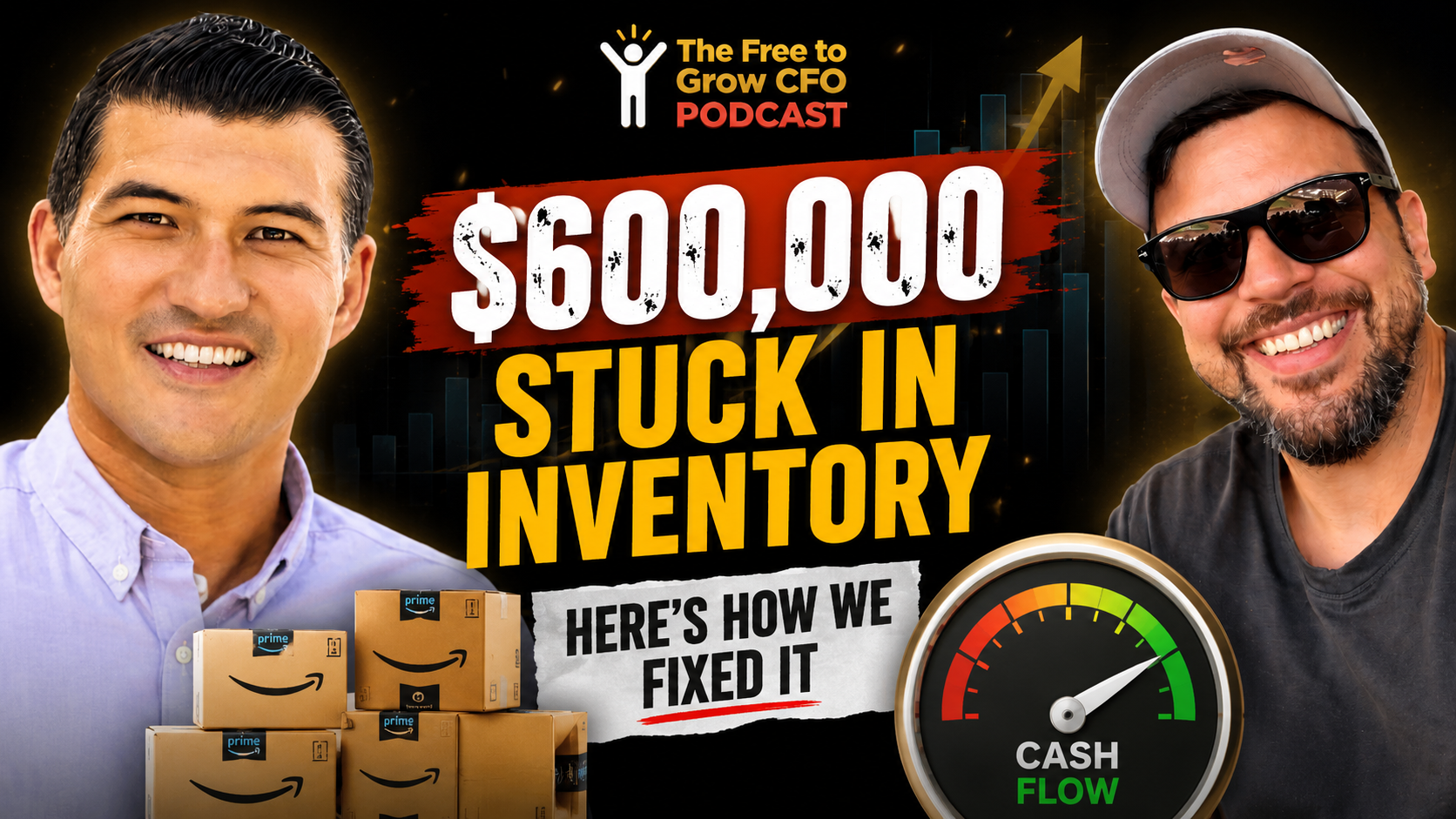
If you're scaling a high-SKU catalog on Amazon and watching your cash disappear even as your P&L looks healthy, this episode will hit home.
In this episode of The Free to Grow CFO Podcast, Jon Blair sits down with Luis Fonseca — D1 football player turned multi-brand Amazon operator and co-founder of Vandor Studio — to unpack the hard-won lessons behind building a profitable, cash-efficient Amazon business. They get into why pricing against competitors quietly destroys your margins, how to think about your SKU catalog as a portfolio of capital investments, and what it actually looks like to go from carrying 272 days of inventory with no cash visibility to having a financial model that forecasts within a fraction of a percent. Luis also makes the case for why DTC brands are leaving real money on the table by avoiding Amazon — and why the cannibalization fear is largely a myth backed by a misunderstanding of who actually buys on each channel.
If you want to grow on Amazon without strangling your cash flow, this one is worth your time.
Key Takeaways
Carrying too many days of inventory is a hidden cash flow killer— visibility into that number is often the first lever a fractional CFO helps you pull.
Your SKU catalog is a portfolio of capital investments; any SKU not hitting your margin threshold is capital you should redeploy somewhere better.
Pricing to beat competitors races you to the bottom — price to your margin target and ignore what everyone else is doing.
Episode Links
Jon Blair - https://www.linkedin.com/in/jonathon-albert-blair/
Luis Fonseca- https://www.linkedin.com/in/lhfonseca/
Free to Grow CFO - https://freetogrowcfo.com/
T1A - https://www.t1aauto.com/
Meet Luis Fonseca
Luis Fonseca is an entrepreneur and former COO of a nine-figure distribution company who specializes in scaling complex product catalogs and operations. He’s known for turning operational chaos into structured, profitable systems through better forecasting, ERP and WMS implementation, and multichannel marketplace integration—all built from hands-on experience managing thousands of SKUs and global supply chains.
Transcript
~~~~~~~~
Chapters
00:43 Introduction to Luis Fonseca
05:56 Lessons from Early Ventures
09:30 Success with Curated Gift Baskets
13:13 Strategic Insights for T1A
16:48 Pricing and Positioning in Competitive Markets
20:20 The Importance of Financial Strategy
25:07 Scaling Challenges and Cash Flow Issues
27:30 The Importance of Financial Modeling
31:15 Navigating Growth and Inventory Management
33:28 Vander Studio: Expanding into Amazon
40:07 Balancing Faith, Family, and Entrepreneurship
Jon Blair (00:43)
Alright, we're back and I am here with my homie Luis Fonseca. Luis, what's up man?
Luis (00:49)
How's it going?
Jon Blair (00:50)
So Luis, I don't even know how to introduce you man, because you've had your hands in so many different things. mean, obviously friend, client, co-founder of T1A, Vandor Studio. You have other businesses and have had other businesses, but I guess I'll stop there. Thanks for joining man. I'm really excited about our chat today. You know, we'll see where the conversation takes us. We're definitely gonna talk about Amazon, definitely gonna talk about e-commerce marketplaces. Might talk a little bit about
having three kids and your faith. Talk about bringing on a fractional CFO, maybe a little bit about making mistakes and how you've recovered from those mistakes, but before we dive into any of that stuff, can you give the audience just a little background of who you are and where you came from?
Luis (01:30)
I mean very short of it. I came as an immigrant. from Brazil. My parents moved here when I was 14 and just went to high school, normal things, got into sports, played football for MSU, ended up getting injured.
and then just went into the career path, right? And I was going towards a corporate world, UPS in business development. And one of my customers snatched me up, you know, to run the operations at a COO for an automotive company. a few months later, it didn't really work out. And then I decided to just kind of branch out on my own. ⁓
that that was kind of the real short version, but in between there I went to college for biblical studies and you know, like there's a lot that I've done, but once I kind of went on my own, never looked back, you know, just I was always thinking with things in the side on Amazon and e-commerce and then I once that one opportunity kind of the door closed, I said I'm doing this because I wasn't getting any younger and I already had two kids and I said if I don't do it now, I will never do it.
Jon Blair (02:33)
Man, okay, so like we won't camp on this, but you just glazed over playing D1 football at MSU. I want to be clear, that's Michigan State University, right? Yeah, exactly. anyways, no slouch. That's Division I, Big Ten football. But that being said, I don't know what it was back then. in terms of the comp, were they in the Big Ten back then? Okay, okay, well, so let's talk about getting into e-commerce.
Luis (02:42)
That's right, yeah.
You're in a big time, yeah.
Jon Blair (02:59)
Take us back to the beginning, because if I'm not mistaken, you tell me if I'm wrong, I think you are, are you a founding member of MDS?
Luis (03:05)
I'm not a founding Alex was my business partner was a founding member.
Jon Blair (03:07)
who was on a few weeks ago. so, but you're in MDS, right? How did you get into e-comm,
get into the MDS crew, get onto Amazon? Like, tell us that story.
Luis (03:15)
⁓ So funny, like I always try to do something online, right? Like so as far back I can remember probably like in 2011,
I was buying and reselling stuff. like, just like arbitraging. used to go like Home Depot, Walmart, like, you know, I'm like going out, loading my car with stuff, coming home, packaging, just sending stuff out. Right. Like, and I did that for, for a few months, you know, and it was fine. And then I ended up buying like almost like not mystery boxes, like return boxes and then reselling on eBay. And that was a lot of work profitable, but no, he was sorting through what's open boxes, what's not.
Jon Blair (03:35)
So awesome.
Yeah.
Luis (03:54)
making pictures like so was kind of how I began online stuff and I, you he made good money in the side, you're doing this at nighttime after you come home from work and you know, we're just kind of hustling. And then my cousin in Brazil kind of reached out and he says, hey, I know this,
guy that has this company in Brazil that has invented this new like you know nail polish thing for for women do you know I say it sounds interesting we started talking it's like well let's bring it I'll try it was my first private label product that I tried was this nail polish thing right and again didn't know the market didn't know private label didn't know anything I said but like I said we'll figure it out we brought it to market was super cheap so you know as far as like the cogs I bring
it in. What I did not realize at the time that you know now I know is like it was new to the market in the US. Nobody knew how to use it so like because people don't know how to use it it was it was just it was gonna fail you know but I didn't know I was like oh but what he did is like I learned Amazon right I learned private label I learned how to
Jon Blair (04:45)
Yeah.
Luis (04:58)
the Selle Central Works and how to send stuff how to brand it, how to trademark, all that little stuff. But it was epic fail you had to teach the people on how to apply that thing and if you apply it wrong, it was a disaster. So it wasn't too bad. I paid off my cousin, paid off the people that was partners with me at the time and I like, I took the losses and I was like.
Jon Blair (05:12)
Yeah.
Luis (05:21)
It was a chalked it up to like learn how to do it. So that was my first private label thing and I was like, I was already kind of hooked right and then my second private label was like this battery packs You know like the cell phone battery packs that you know, like very common but I was early into this and I found a supplier and I was like, alright, let's do this and He kind of just took off like, know like this battery like the one model that I had took off.
And then I had, it really, like for me at the time was huge. It was nothing now. Like it was just like, I think we were selling like 20 to 40,000 a month in that first one, you know? But it was like the first batch. it was just, you know, so we're like, my word, this is going to blow up. And then,
Jon Blair (05:51)
How big did you scale it and how fast?
Yeah. Yeah.
Totally. Yeah.
Luis (06:09)
And we got so excited, it was like, okay, let's go ahead and get the second and third different kind. Well, the problem is, again, is this learning curve, because this one took off, doesn't mean the number two and three are gonna take off the same way. And again, didn't know the nuances. I wasn't crazy on optimization, and I was just kinda like, we threw it out there, I got some good images that I kinda figured, I did all the images myself, I'm like, don't.
shop and illustrator and like I'm doing everything myself. then the second and third one was just low selling and I have all this inventory that I made money in this one and I put in this one and ended up and just again I finally pulled the plug in it and I says okay this is not gonna work so that was a lesson but again you just like you just you're starting to figure out like this works this does not work and then and then you will start figuring out like okay because this won't work doesn't mean that this number
Jon Blair (06:36)
Hahaha
Totally.
Luis (07:00)
B is going to work, you know, we have to really kind of think of the product and why is the consumer buying this one versus this one, you know, and then the price point like so like it was just so many little lessons that you learn in those little failures.
Jon Blair (07:12)
Totally.
Luis (07:13)
And then that's during that gap that I did the battery pack. then I did some of the solar because it was like I had a solar power battery pack and then I had like a solar panel that you can plug in just a cord and charge your phone. And it was sort of gimmicky because I mean, think about it. This is in 2000 and.
15 or 16 There really wasn't that good of a product back then like the solar panels now are really really good So I could barely charge your phone. So like it didn't work, know, so like we So we learned, know, obviously you can have a beautiful image and everything else But if your product is not good, it's just gonna fail like, you know, you gotta get negative reviews But that's what I
Jon Blair (07:36)
Yeah, for sure.
free.
So what
was the first, I'm curious, what was the first product or brand that you felt like it nailed it in terms of you're finally starting to figure out profitability and scale?
Luis (08:04)
Oh, that was that was so that was kind of the gap, right? So I took the lumps from this one. I went to manage that company as a COO. And this is like, again, this is a big company. Like, you know, I had 300 employees under me and we're doing 200 plus million dollars a year.
And then that was kind of like, know, the leadership and I didn't kind of see eye to eye. So we kind of parted apart, like we separated. And then I said, I'm going to do this. And then I, at that time I had called ⁓ a guy that had done e-commerce and exited, you know, for, for multiples of millions. And then he kind of guided me through the, my, like, you the couple of ventures that I had.
And I said, hey, I'm thinking about doing this full time. What is your thoughts? And then he was like, hey, you should do it, otherwise you're never going to do it. And then I sat on it for another week and I called him back. was like, I want to do it, can't. I do want to go together. it was a scary thing. I got two kids and I had to be able to provide. And he was about.
Jon Blair (08:58)
Yeah, yeah.
Luis (09:04)
probably two and half years retired, you know, because he sold at the age of 40, know, 42, whatever it is he was, and he was getting bored. So it's like, yeah, I'll go with you. And what we did is like, we did specialty gift baskets. And that's kind of when we actually made it. So we curated the baskets. So we really, it was quasi private label, but not really because we were using other people's products, but we curated the experience, right? designed the
Jon Blair (09:09)
Yeah.
Mm.
Got it.
Luis (09:32)
bags that you went in. So we had two brands. One was a box, one was a bag and the bag was a burlap with the design and had sayings in it. We had mugs and know with particular sayings. So we had a coffee bag. had a dad's father's day gift basket with beef jerky and then you know and what we did is we created multiple brands of the beef jerky so that way you're getting we're a full spicy one. So we had like you know 15 different kinds of different brands of spicy ones. We did you know Halloween basket like Easter like so we
kind of did all this curated things and we kind of in less than two years I think we kind of I think when I left when I exited and I sold my shares to him we did a little over four million dollars on the second year so we did we went from year one to year two and we did a over four million and I kind of sold my shares to him and that's gonna I come into T1A
Jon Blair (10:22)
Okay,
so coming to T1A, right? ⁓
Luis (10:26)
Yeah.
Jon Blair (10:26)
with the lessons that you learned from those previous ventures, both like failures and success, when you came into T1A, what was it that you were like, this is gonna work and this is how we're gonna hit profitability and scale, and you knew at least in part that it was gonna work because of the wisdom you have from your previous ventures?
Luis (10:46)
So.
A couple things, right? So first we the product had to be quality, right? So can I had good images I got the product look good But like their product is junk like you're gonna get negative reviews because it's gonna break or whatever So and reviews as you know is king and the game is different, right? We can't Get new reviews like we used to be able to back in the day in amazon So the product has to be good. The second thing that partnership
Jon Blair (11:00)
Yeah.
Luis (11:12)
taught me that was a big deal that I still take to this day is like I never want to have one SKU doing multiples and multiples and multiples of million dollars I just like for me like and I will tell you why and even the lesson carried to T1A to a few years like to last I was a last year no 2024
So that was one of the big lessons I learned. I'd rather have good SKUs that are doing solid sales and kind of just spread the wealth. Because you never know what's going to happen. Amazon may pull a listing down, or you may have quality issues, or your supplier may... If you hear a SKU goes down, and that's basically 80 % of your revenue, like...
If you have people like employees and everything, you're just done. Right? So, so that was one thing that I took away. So it was like the quality of it, customer kind of spreading the wealth and as far as like the SKU counts and the motto is kind of go a little bit wider, not kind of like, you know, just focus on one or two. But those are kind of like the models that I live by, know, like I was like.
Jon Blair (11:58)
Yeah.
Yeah,
it's interesting, because what you're talking about, what I call from the finance perspective is is concentration risk, right? There's different concentration risks where you have various aspects of a business that may be over-concentrated or over-reliant on a specific area, and it ends up potentially being a single point of failure, right? And that single point of failure, like, dude, when I first started Free to Grow CFO four years ago, one of my first clients,
They were a brand that in one year, when I served them as CFO, we took the brand from 1.8 million in revenue to 35 million in a single year. And everyone was like, we're going to the moon, we're going to 100 million, right? Because everyone was high on just like the growth and how much profit we were generating. But we learned big time the next year about the single point of failure because it was a single SKU brand, right? And mostly single channel.
meta ads and their account got banned on meta for two weeks and the business still exists today but they're about half the size in terms of revenue and they've never fully recovered from a profitability standpoint. There's a lot of things that I learned about that in that whole experience but one of the big ones was what you're talking about. Concentration risk, single point of failure and they had two. They had an ad channel concentration and
Luis (13:19)
⁓
Jon Blair (13:41)
a SKU catalog concentration and it nearly killed the business. I'm not joking, overnight. Like it was crazy. ⁓
Luis (13:50)
Well,
I've seen it happen, you know, and so but the the one more thing that I meant to say and didn't say it And I still get caught up not as much now, you know that I used to but like I did it even with T1A in the beginning is this price competition we kind of raced to the bottom because you see the competitors and and with T1A is a little more difficult if you will because like there's other people selling similar products that I sell like I mean for the exact same car
Jon Blair (14:05)
Yeah.
Luis (14:17)
models and everything else but like with the gift baskets like you you're trying to compete with like those other guys that selling similar baskets and you're kind of pricing it down and all of a sudden you're just kind of taking your margins away I completely I don't even look at a competitor I haven't in in probably almost two years I price it based on what I need to make money on so like ⁓
Jon Blair (14:35)
Interesting.
Okay, so it's interesting, because I actually, I
had this written down as a question, so I wanna ask you this. How do you approach pricing, but also just positioning? When I'm thinking about, in particular, we're talking about marketplaces, like Amazon, eBay, there's other sellers. It's not like DTC where you're a single brand store, right? So there's lots of competition. They show up on your listings, they show up in sponsored ads, they show up all over the place. How do you think about
and positioning in a marketplace where there's other people competing for that same customer.
Luis (15:11)
Yeah, I don't look to compete with them. I don't want to quite honestly. So I know what I need to make, you know, as far as profitability, because we did construct it even like ever since we actually joined your company. We did construct our pricing. We know all of the levers. We know how much our cogs are landed average cost, all the stuff that is, you know, we can get into later
I just know what we need to make in the end of the I'm no longer married to any parts and there is a syndrome with people like us, know, with the Amazon sellers well, let's try this and we can make this work, right? Okay, let's give this one more shot. Let's put this more, you know, money into pushing ads or this. And I'm like, if it's not making the margin I want, I want it gone you know, so I have a, I have a like a three month scale. Like I told, like if we have,
Jon Blair (15:54)
Yeah.
Luis (15:58)
lost money, and when I say losing money, I like I lost 35 bucks in this part over the last three months, but I'm carrying the part, right? So I got money tied up in parts I got money in storage, I got money in this, and it has not made any money. So I said, okay, why has it made no money? And then my question is like, is that price wrong? So I can price it right to make the margins that I need.
Jon Blair (16:06)
Yeah.
Luis (16:19)
If the price is not wrong, why can I make the money? Is that because I'm selling outside of Amazon? So really the cost is like the shipping. So it's not real. Or the third is like, is the advertising on this part, right? Because if it's a variation, maybe we're just pushing ads on one and then we have a family of the rest of the parts, right? So if it doesn't apply to those things, we cut it. It's like, and my cut it, I mean, like, I'm not even trying to sell it out or I said like,
Jon Blair (16:26)
Yeah
Luis (16:48)
dispose of Amazon and cut the losses I can put their money somewhere else you know
Jon Blair (16:53)
That's interesting. And you know what? Like,
look, I give you a lot of credit for that because founders do generally speaking have issues with like doing surgery on their SKU catalog. This comes up a lot with brands that we work with. And honestly, like, look, I understand it to some degree. There are some brands that we work with that the founders are just very emotionally invested in the product because they developed it.
a lot of times, and so like, they have a lot of their heart and soul in that product. But what you're saying is really important, which is like, listen, we're in the business of making a positive return on our capital invested, right? And when I launch a product or bring a product to market, even if it's an aftermarket product like you guys, still, when you are putting dollars into that, launching that part,
you're expecting it to make a return that makes it worthwhile, a worthwhile investment. And if not, you have to cut your losses and you have to reallocate that capital elsewhere. So I talk about this a lot on this podcast and my other podcast, Ecom Scaling Show, that we really need to think about our SKU catalog or we really need to think about our inventory position and how much stock we have at a SKU level. We need to think about it as a portfolio of investments.
because that's really what it is. It's actually no different than a real estate investor that has a portfolio of say 25 properties. They had some thesis on the front end that they were gonna put X amount of capital into each one of those and get Y return. And if you're not getting it, you have to ask yourself if you should cut your losses and reallocate the capital elsewhere to get the return that you need to get.
Luis (18:30)
Yeah, in the end of the day, and that's how I see it, is like, I'm here to make money. So like, I used to do that, you know, like, because it's very natural for founders to be like, oh, we can figure out, let's keep trying. I was like, but it got to the point that I realized that I can just say, no, I want to do this product that I can make more money. So like even now, like we are getting even more aggressive in the cutting to the point that if it's like single digits profit margin, we are
cutting it. So like if it's like making six or seven or ten percent you know we're like do we really want to keep this because I can allocate this money to something that's a 33 % right or a 32 % margin.
Jon Blair (19:09)
For sure. Well, I mean,
if you, if you think about it, man, business in general, it doesn't matter whether you're an e-comm or you're in some other business, business is all about allocating capital to make a return, right? You're either allocating actual like monetary capital, like actual cash, or you're allocating human capital, sweat equity, time, right? Or you're allocating like physical capital, like
machinery and buildings and things of that nature. But the bottom line is like business takes those different forms of capital and brings it into a system that allows that capital to generate more than it would generate outside of that system. And the system being the business, right? And so I do say, I've been trying to actually talk about this a lot more to brands and in my content, which is like, guys, business is a money game. I don't care what vertical you're in.
It's a money game. So you have to have a money person on your team. And like, if you don't have a money person on your team, you're gonna be in trouble at some point because the game you're playing is a money game.
Luis (20:08)
Yeah, and.
Well, it is funny like and again, I don't want to kind of jump into the CFO thing but like
I had this conversation more often than you know, than none with other founders. And I realized that they're running those businesses in spreadsheets and Google Sheets. I was like, yeah, you really need to do this. And I talked to somebody a couple weeks ago for Inspire and they're doing like 20 plus mil and they don't have a CFO. They're running a spreadsheets. I'm like, dude, like what, why? And then I explained just like one facet, right? That you're like from your team that we did.
Jon Blair (20:46)
Yeah.
Luis (20:48)
analysis I think this is a about a year ago on our inventory and we were carrying 272 days worth of inventory on average and that's kind of what prompted me to start kind of like getting more aggressive we're down to about 170 ish days now so we cut a hundred days worth of inventories but the impact on the cash that lever was like whenever he told me that number it was what I was like I was like we got to get rid of this
Jon Blair (21:12)
Yeah, dude, mean, 100 days of inventory is a
lot of cash flow to get locked up, you know? Like, I mean, to go from 270 to 170, that 100-day differential is massive.
Luis (21:24)
Yeah, so like that's kind of what the lever like but again not knowing the numbers you wouldn't know right? was like once like so I can't pull the lever if I didn't know like in my mind is like we're carrying is profitable and but it's just sitting there and you're selling like, you know, Five units or ten units. Yeah, it's profitable. But at what cost right then money's tied up I have to continue to order a slow selling product that is making small margin versus like investing know something that is a higher profit margin and faster movers, right so
Jon Blair (21:30)
Yeah.
Luis (21:52)
It's sort of like now we guys are our decisions like I'm sitting this next week and a half
with my purchasing person is like we're gonna go over you know these hundreds of SKUs that we want to order and we're gonna say no like okay which ones have the highest margins which has the highest probability of selling you know because in the past was like we would buy like this segment of products right so i'll buy like okay we're gonna add 50 but if i add one part for this car i used to get like you know the four others that kind of complement that part well this one may be a good seller this one may be a slow and this other two may not be as good but i
Jon Blair (22:21)
Yeah.
Luis (22:27)
because I'll say, if this person buy this, he may want the whole family. I kind of dish that approach is kind of like, I want to get the partners are going to sell, you know.
Jon Blair (22:35)
For sure,
dude, there is a trap in that for sure, man. And the other thing is if you have all these connections or these, you're forecasting that there's this connection, right? If you're wrong and those linkages break in reality, then you're just left with this crazy inventory position issue. So you guys are playing, so this is something new. I haven't like formally
you know, launch this quote, so to speak, from like a marketing messaging standpoint, but I've been working on it. It's this signature way that Free to Grow, we already do this, I just haven't put like a ⁓ name or a structure to it. We help brands figure out what marketing game they're playing, because we're not all playing the same game. You know, there's the high LTV game, like supplements and cosmetics. There's the durable, good, like new customer dominant game that's like beauty devices and electronics and things.
And then there's the high SKU count game. That's the game you guys are playing, right? And the high SKU count game, generally speaking, you actually can have a decent amount of lifetime value. People will repurchase from you, but it doesn't happen in a short period of time. They purchase from you over like 12 months, 24 months, 36 months, they repeat purchase from you, right? And they usually repeat purchase from you as your SKU catalog grows and you launch new products.
So what's the, what is the driver of growth? The driver of growth is launching new products, but what is potentially the killer of growth? Launching too many new products because it kills all of your cashflow. And so our job as CFOs is to identify that you're playing that game and help think through how to balance the fact that like, yeah, yeah, we could protect cashflow. We could protect cashflow by just stopping launching any new SKUs, but because of the game you're playing,
that also would kill growth and we can't do that. So we gotta figure out how to balance them. what was the moment when you realized that it was time to seriously consider bringing Free to Grow CFO on to provide, because you already had bookkeeping in place, but this was like true CFO financial strategy. When was the moment when you realized that it was time for that?
Luis (24:43)
It was funny because it was twofold, right? I think when I first contacted you, I was too early. I wanted to do it, but I was too early, developed a relationship and we kept in touch over the... I think it was a whole year that you would just say, you text me and say, okay, I'm praying for you today. Is anything specific? And then you call, just check on me, how the family, how the kids. So we had this whole relationship.
Jon Blair (24:57)
Yeah, I think it might have been.
Luis (25:07)
And then I was still scaling, right? So I was growing so rapidly. Like, I mean, I still am. Like, I mean, I think we grew 100 % year over year for the past, like, ⁓ three years. And I had...
made this massive investment in the company, you know, say we're gonna launch like I think 350 SKUs or something like stupid, you know, for the time, it's kind of like one of those things that we...
I'm seeing the mountain peaks, but I'm not seeing the valleys, you know sort of thing. So like so I had all this stuff and I'm scaling What I did not have the foresight of seeing is like the bill is gonna come due But so I got the money for the order. I paid for the order. I got the products I didn't have the money for the second and third order because the you know at that time like you said I had 272 days worth of inventory. So as we were ordering now with our
Jon Blair (25:31)
For sure. Yeah.
for sure.
Luis (25:58)
the way that works is like, hey, start slowly, like you're doing 10, 15, but then you're ordering six months. So, and then all of a sudden those same 15 goes to 40. And now you have your order goes like, oh, I don't need only a hundred. need like, I need a thousand parts. So like that, the subsequent orders were so high.
Jon Blair (26:07)
Yeah, yeah.
Totally.
Luis (26:16)
that I was getting into this like massive cash flow issue that I did not have to foresight a scene right I'm just like hey I'm like running high we're growing numbers are great profitability is great but
I'm sitting on this inventory and I had to buy more in order to keep growing. And then, so I had that conversation with you. It like, I think it's time, you know, I, I can't forecast, you know, I don't have visibility. Like I don't know what's happening and I don't know where my cash is going. Like, cause like, like the numbers are right. Like, you know, my cogs are right. My shipping is right. My tariffs, I got everything, but where's my cash? You know? Yeah.
Jon Blair (26:32)
Yeah.
for sure and you're profitable right the P&L says you're making
money right
Luis (26:56)
Yeah,
so and then so but I don't know where the cash was going. And then we realized, I mean, he's going to parts I had, I had an idea, but I couldn't verbalize it. And I could not put it on paper.
Jon Blair (27:06)
I wanna ask you this because sometimes when I talk to brands who are interested in working with us, I've actually personally been trying to figure out how to describe our financial model in a way that a founder cares about. Not in a, you know, like the way I talk to one of our CFOs about our financial model. Because I do think there are some founders who are like, do I need a financial model? I get this a lot. I don't think I really need one.
wouldn't use it anyways. Like, just my CFO would use it. When you first got your financial model built by Free to Grow and now like you've been with us, I actually haven't even looked up how long we've been together, but like after all these months of working together and you have the financial model every single month, right, and you have the ability to see forward, right, not just backward, which is like, what has that done for you personally and your ability to run the business?
Luis (27:43)
It's been over a year, yeah.
It's funny because like our financial model is I feel like it's so dialed down right now that like Like we just did last month. We're gonna do next week. We do February, right? Because I ran behind but like what's with them like
less than a percentage off like for forecasting what we're gonna hit in February. the numbers are so close. It's like, yeah, you're with like 0.03 and marketing, know, you're with 0.5 and operating costs. Like, so it's been so dialed down that like we really know that the model is working.
But what we are doing because we want to scale like I know that hey I can grow at this point and if I pull this lever like we are talking about now terms, right? This is the one that we're trying to pull so like I'm gonna go from 90 to you know Possibly six months worth of terms from from from three months, but we say okay if we do this we can grow at this rate So we're talking about different things
that makes a difference to the business. So I know that if I keep running at the rate I'm running, I'm going to run out of cash, you know, in April of 2027, right? I would never be able to tell this, right? So as a founder, those are very powerful. Like, I think was early on within the first two months is the aha moment. And I think that's a good case that I make when I'm people about CFOs like, listen, I knew that if I cut down my inventory from 10 months to seven months, you'll be like,
Jon Blair (29:01)
Mm-hmm.
Luis (29:19)
500 to 600 thousand dollars freed up in cash flow right I knew another there was a second lever that I think that if we change it'll be another like 450,000 if we change it from a 3pl and like so it was just like I mean those numbers were adding pretty fast like I mean we're talking about making a few changes and we're talking about like a million dollars of cash flow for being freed up right
Jon Blair (29:40)
Yeah, which is like going back to
our discussion about capital allocation, right? Now, where do you, now you have a million dollars more to allocate to where you see the best use of that cash to go, right?
Luis (29:43)
Yeah.
So exactly,
if you're trying to grow and then you realize that if you change a few things or you know what levers to pull and that's what I like, I just had this discussion with somebody was like.
saying I don't know if I'm using this service right. I was like, well, have you tried this lever? Have you asked about this? Like everyone was like, no, I didn't know to ask. I was like, well, you need to put your person to work. I'm asking all kinds of different questions to my CFO. So I think that sometimes your customer, your client, or people there are...
Jon Blair (30:15)
Yeah.
Luis (30:26)
founders they just don't even know that they need it because they don't know what questions to ask so and what is the most important like that people are asked like they need they want to grow and they want to be profitable so I think if you can say hey you got to think in those levers and and so we can actually think through but like it's hard because it's it's a lot of those founders are so attached and they're so scared of giving
Jon Blair (30:51)
control yeah
Luis (30:51)
pieces of the puzzle
to somebody that hinder their own growth and then until they realize that like hey I don't know how else to grow this thing and and I don't know
Jon Blair (30:54)
sure.
Luis (31:04)
what the next step is, right? So I told everybody that I talk about the CFO services, that was probably the best dollars that I spend is this, because if I don't have the model, I'm running blind, right? When I was doing it myself, my books were like two or three months behind, you know? So I was running blind, you know?
Jon Blair (31:22)
Ahem.
Luis (31:25)
like completely blind without sound like it was just everything right like I'm just kind of winging it because by the time I got the information by the time I got my books done I'm already three months ahead like you know so
Jon Blair (31:36)
Yeah, yeah, all that stuff has become irrelevant and
you've bought that much more inventory, you're growing that much more like all that is in the rear view mirror.
Luis (31:42)
So.
And I'm getting to the point now that we're going to enter another massive growth phase.
I know exactly what I can do. I what rate I can grow. know exactly number of SKUs I can add because we've done it in the past so we know what the allocation of SKUs is in order to grow at certain pace. Like I mean, we are getting really granular and it's only gonna get more because we are diversifying now to DTC and eBay and Walmart.
So in those channels are also growing. So now we're going to say, okay, we're going to have to kind of get into a more mixed modeling to see where the ads are being spent and how it's affecting each of the channels, you know, because it's just, a completely different level that I wasn't even thinking about a year ago. Right. So
Jon Blair (32:25)
for sure.
Yeah, yeah, for sure.
Luis (32:33)
I can't do this without a team like yours. I doesn't make, I couldn't.
Jon Blair (32:37)
it, honestly man, you telling that story actually kind of gives me goosebumps because I just think about honestly, like you probably know this at this point, working with us for the last year or so, we're not out there making any claims that we do something that we don't actually do with our service. We're not, we're just out there, we just have a group of people who are just trying to do good work, right? And who are trying to help, we all for whatever reason have this, call it a passion or a sickness for
e-commerce, right? And we're just trying to help people run businesses better. And the story of working with you guys has been exactly why we do this every single day and so much fun and we're excited about the future. I do want to ask you something unrelated, which is Vandor Studio, which we had your business partner Alex Chiru on a few weeks ago on the podcast. I talked to him about it. What are you guys doing over there at Vandor Studio for brands on Amazon?
Luis (33:28)
Yeah, that's been a fun project Alex and I kind of venture in the side because we are, you know, I think we both laugh, but we're like, we're idiots and we say like, we don't need sleep, right? Like, so like, let's do But we love what we do. We love e-commerce is a hate love relationship, you know, and we are good at it. Yeah. And, but there's a need. mean, there's a lot of brands that don't know.
Jon Blair (33:41)
Hahaha
Yeah, exactly. That's why I said, is it a passion or is it a sickness?
Luis (33:55)
Amazon so we got a it's kind of boutique. We we try to keep it very small We were very selective of who we bring in and if we can't help you great if we can't help you would tell you I came in like I don't think we're a good fit. We really can't help you
don't want to like we're not just taking people in just because but really we're a full management, right? Like so we are doing pretty much A through Z on Amazon. So we are doing all the images all the SEO all the management All like, you know some cases of forecasting, you know, if they don't have forecasting for the Amazon side Creating the shipments. I mean really you'd be completely hands-off for anybody And we really do try for the most part
deal with more DTC brands that just kind of like don't do amazon or they see amazon
as like this completely different animal, which it is in essence a little bit different than the world of DTC, right? But it is not the enemy. The funny thing is like we talked to these people and they're doing crazy numbers. They're amazing what they do with DTC and they either have tried Amazon and failed miserably or they're completely scared of it because they think it's gonna cannibalize their...
DTC brand or the DTC customer but they don't understand that
they're completely different customers. If they have not bought in your DTC, they aren't going to buy it. They're to buy an Amazon, right? Like, so if they bought an Amazon, they're not your DTC customer because really what's happening for the most part that we've seen it happen is like customer goes to Facebook and they see your ad and they like it and they go to Amazon, they search it. It's not an Amazon. They won't buy it. They won't go back to your brand and buy it. But if they see on Amazon, they trust, they know they can get in two days. They do whatever to buy it.
So we have seen quite the opposite. It does not cannibalize the DTC. It actually grows and it grows rapidly, you know, in Amazon, but it's still different. You know, it's a completely different animal that the the customer service Amazon and the support and performance team works are their nightmare to DTC people because they don't know how to handle it.
Jon Blair (36:01)
you
screw it up, your listing gets, you know, banned or you lose momentum. It really did.
Luis (36:03)
delisted, banned, deranked.
Yeah, they don't understand the ranking system. They don't understand So it's all things that we have grown to be very good at. And Alex has a very unique set of skills. he was in a podcast. And I don't know if Alex told you, but he exit four times. the guy.
Jon Blair (36:21)
He did. Alex
is the best. Alex cracks me up. Because when he's talking, he's talking as if like, I'm nothing special. I don't know anything. But then he gets, then you get him going and you're like, this guy knows exactly what he's talking about. But ⁓ yeah, no, but I mean, it's interesting. I want to call it one thing, which is that.
Luis (36:35)
Yeah.
Jon Blair (36:39)
You know, we see that I, from the CFO perspective, I think I see the same thing and is what you just mentioned. Alex mentioned it when he was on the podcast. it, it is not, there may be a little bit of overlap, but it is truly a creative. It's not like, it's not a big cannibalization. And furthermore, if you can figure out how to run Amazon properly, which is why bringing in guys like you on Vandor Studio, like bringing guys like you and Alex in is, is key. If you know how to operate on Amazon.
it can be a massive tailwind of growth to compliment your D T C store. It's the first place that I recommend brands look when they're looking to expand from their Shopify stores. Look at Amazon next. But you do need to know how to run Amazon properly, especially because of how tightly woven together customer support and operational efficiency is to the momentum.
Luis (37:19)
Yeah.
Jon Blair (37:31)
of your listing and your ranking and all that kind of stuff. You can't screw that up.
Luis (37:33)
Yeah.
And the biggest issue we see too is they put such little faith or such little...
they feel like it's like this Little brother sort of thing and they don't pay attention so they don't send inventory they stock out like and it just hurts them but like the profitability is so much higher because the spillover right like you're doing so good in your DTC and that spillover to Amazon is real and again those buyers are buyers Amazon buyers if they come into Amazon
Jon Blair (37:43)
Yeah.
Luis (38:01)
maybe a small percentage will go back and buy on your website, but the reality is if like they don't find Amazon, you may have lost this. So it's like you're catching all those customers that wouldn't have bought your product anyways. we have a customer that we just brought think five months ago, and we put their product on and they sold out within a week and a half.
And we had told them like, we need this much inventory. This is a, can't send that much. It was like, it was like, we're to need it. We're to stock out. It's like, okay, I don't like, they didn't believe it. So they said it was a week and a half. And then I was like, when can you send more? And it was like a month. So we're like, I had to stock for like a month.
Jon Blair (38:35)
Yeah.
Luis (38:35)
and
then we send more and then it's stocked out another two weeks. And then now they're like, oh, I think in 2026, we're gonna really pay attention to Amazon. I was like, yeah, you think? So now they're like, they're really like, really going full goal at Amazon, which is kind of fun to see, but their numbers are so much more profitable. Like they're like, they're thinking AOV and everything is not as good because like, you know, they're saying that customer on their website buys one or two or three products, Amazon is only one. And I was like, well,
Jon Blair (38:39)
Hahaha!
Luis (39:03)
Yeah, but your acquisition cost is crazy, you know, on there. I'm at 44 % margin on Amazon because you're a spillover with very little ads and like, you know, so like, it's just a different, it just complements it so well.
Jon Blair (39:08)
Yeah.
that's how I can tell it works on the CFO side is I can't do perfect attribution, but I, when I see that the blended marketing efficiency ratio, when you combine Shopify and Amazon goes up and I see contribution margin dollars combined goes up that I can't tell you exactly how much is coming from where, but I can tell you that, that it's, it's adding more profit to the bottom line and it's, it's ultimately making the marketing spend more efficient.
Luis (39:38)
is working yeah yeah
Jon Blair (39:44)
I want to ask you about one final thing before we close out here, which is, when you were in college, you were getting a degree in biblical studies. You and I are both Christians, followers of Jesus. We both have three kids. I will be the first person to say that the craziest thing I ever decided to do was be a follower of Jesus, an entrepreneur, and a father of three kids all at the same time.
I had no idea what I was getting myself into by deciding to do all three of those things. How do you do it, And do you have any advice for anyone else, anyone listening who may be in a similar position to you?
Luis (40:19)
I don't know how I do it, the same way you're doing me there. I can say that guess I'm foolish in some aspects. I'm kind of fearless. I'll say, okay, and I just kind of, I jumped two feet first and I will try to figure it out. But it is hard. The three kids, like I start with the kids, right? They are by far the greatest gift. They are awesome. They are fun. And they're also hard.
Jon Blair (40:20)
Hahaha
Yeah.
Luis (40:42)
Like
And every phase is hard. I think we're kids in similar ages, but I got an eight going to nine, a six year old going on seven and a three year old.
And every phase is like, oh, this is awesome. Like you can do this or you figure this out. And then you are dealing with other problems. The problem just gets different. And you're like, oh my word, why? Why would you do this? faith and trying to parent it well.
you know, it's hard because the balance is skewed, right? Like I don't have a nine to five job, right? So when I decided to go full goal in business,
Jon Blair (41:16)
Yeah. Yep.
Luis (41:21)
the schedule is out the window. Like I work when I work, know, like things have to get done and if things break, I'm in the computer. And my biggest problem is like this, right? Like it never turns off, right? So like my emails are on, so it is very hard. So a couple of things that we do, and I'm not perfect in this at all. Like you can ask my wife and she'll be the first one to tell you, it's like no.
Jon Blair (41:33)
Dude, I know I have the biggest problem with that, man.
Luis (41:46)
like we try to have dinner as a family you know because with the job that I have I have the flexibility right so we try to have family dinners together every day so we sit and we chat and you know I try not to look at the phone you know I I'm not very good at it so we try to do that we we make church a priority so like we try very hard to never never miss going to church because that's our family you know time
is our church family time and the fellowship is important to us. We try to host other people from church in our house so like we haven't done much in lately because life has been chaotic but we just got this new house and then we are we're putting the pool in the house and we're like we're go back to hosting once or twice you know per month because again I think it's spending time with the the body of Christ is important.
And then I have a small group that I meet with every Wednesday morning, like 7 You know, and it's a small, it's like, it's four of us. then we try to keep each other accountable to reading, prayer, and memorization. So again, I'm far from perfect. I fail all the time. I don't read as often as I should. I don't follow, but you know, it's an imperfect walk and that's kind of what it is.
Jon Blair (42:58)
That's why we need Jesus, I'm convinced that God gave me all of this, made me jump into all this stuff to increase my faith. I'm convinced because I'm like, I do not have this all figured out. I am not in control of all of this. In fact, the more that I get involved in, I don't know, man, this is probably ⁓ a whole nother episode, but like,
Luis (43:00)
Yeah, so then.
no.
Jon Blair (43:23)
I'm becoming more more convinced because it says in Genesis that God created man in his image, right? And if you think about who is the God of the Bible, one of the things that he very clearly is, is what? A God of creation. So if we're made in his image, we're made to be creators. And guys like me and you, we have found our way into creation, being an image bearer of God. We found our way into doing that through entrepreneurship. And
But the Bible also says that although we were made in God's image, we're also cursed by sin. And so sin mars the very things that we're trying to do to be like God, right? And I just, the more and more that I, you know, we create children by having kids, we create businesses by being entrepreneurs, and the more and more I create, the more and more I'm like, I am not in control, and I very clearly need Jesus, and I'm a total mess.
And I don't know how to do any of this stuff, but somehow through God's grace, it bears fruit, you know?
Luis (44:20)
Yeah, that's
the only way. And then the worst thing is when you see your kids do things that you're like, ⁓ that's totally me, right? You're like, you're strong. And you see you, because they are just copying you. They're watching you so closely. And it's hard. But it is such a joyful thing to have those kids. And we are just hopefully creating.
Jon Blair (44:30)
Yeah
Luis (44:46)
little God followers here and you know we're just trying to create good human beings that are gonna follow Christ in the future and we just keep reminding ourselves of that and then the one thing though for parenting and and I'm sure you do the same is like we are very quick to if I'm wrong I tell them like I say hey daddy was
Jon Blair (45:03)
Yeah,
Yeah.
Luis (45:04)
know, because I fail all the time and
I think it's hard. think for a lot of parents, this is very hard because like you just don't apologize to your kid, right? Like it's like, my kid, man, I do that almost daily. It was like, hey, daddy was wrong. I'm sorry. Can you forgive me? Like I shouldn't have said that. I shouldn't have, you know, yelled at you or I should like whatever, you know, like it's just like, but it is a completely humbling thing, but it goes a long way, you know? Yeah.
Jon Blair (45:24)
Yep, totally.
It does. Well, and I think
that's the real, at end of the day, we're all in the same boat that we all struggle with the same you know, sin, being humans cursed by sin. And so the best thing we can do is be real about it, you know? Look, man, this was an awesome conversation. I can't tell you how much I appreciate you as a friend, as a client of Free to Grow CFO.
It's been great working with you so far. We look forward to helping you take the brand to new heights in 2026 and beyond. But before we end here, where can people find more information about Vandor Studio and about T1A? ⁓
Luis (46:04)
⁓ T1a you can go to our website website at t1aauto.com Vandor studio the website should hopefully be live here within the next week because we are been completely word of mouth You know, like we we don't advertise when or anything is just all recommendations But we are putting the website together will be vandor studio .com should be live here Hopefully within the next couple weeks, but you can just email us a hello at vandor studio v a n d o r
studio, no s dot com. But with the website to be ready and like I said, we're boutique. We're just trying to help people do well in Amazon. We we're very good, you know, at that niche, you know, so we we figure we can help people there. So
Jon Blair (46:48)
Awesome man. Well, thanks again for coming on forward to our next chat. I might have to have you come back and talk to me a little bit more about Vandor Studios as you guys get that going. But thanks again for coming on man and chat with you soon.
Luis (46:59)
Yeah.
Thank you.