Here Are The Places Your Books Are Broken (And How to Fix It)
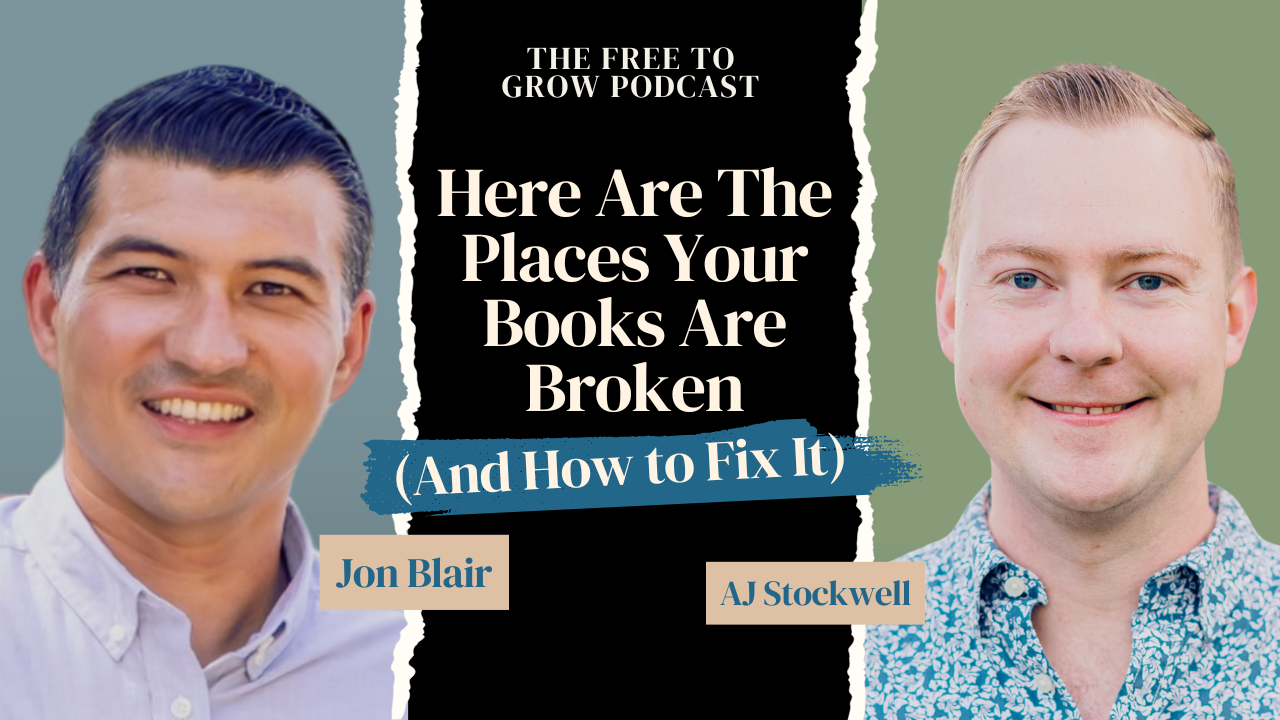
Episode Summary
Most founders rely on the P&L to run their business. The real risks—and the real truth—live on the balance sheet.
In this episode, Jon Blair sits down with AJ Stockwell, founder of Climb CFO, to break down how messy books quietly distort cash flow, margins, and decision-making in growing DTC brands. They unpack the most common red flags they see in cleanup projects—from cash-in-transit and merchant clearing errors to inventory mistakes that make gross margins meaningless.
This conversation gives founders a practical framework for knowing when a cleanup is necessary, how to think about the ROI of fixing historical financials, and why accurate balance sheets are non-negotiable once a brand starts scaling or pursuing outside capital.
What You’ll Learn
The #1 red flag that signals revenue and cash are likely misstated
Why the balance sheet—not the P&L—is the fastest way to spot broken books
Why inventory is the hardest account to clean up (and the most dangerous to ignore)
The difference between light cleanups vs. heavy cleanups—and how to evaluate ROI
Episode Links
Jon Blair - https://www.linkedin.com/in/jonathon-albert-blair/
AJ Stockwell- https://www.linkedin.com/in/ajstockwell/
Free to Grow CFO - https://www.freetogrowcfo.com/
Climb CFO - https://climbcfo.com/
Meet AJ Stockwell
AJ Stockwell spent a decade as the CFO and Controller of numerous e-commerce brands, both in-house and on a fractional basis through his firm Climb CFO. More recently, he has shifted his firm's focus to accounting education and helping businesses clean up their books rather than providing ongoing CFO support.
Transcript
~~~
00:00 – Intro: Why Most Founders Miss the Real Financial Problem
02:35 – The #1 Red Flag: Why the Balance Sheet Matters More Than the P&L
05:50 – Merchant Clearing Accounts & Undeposited Funds Explained
07:00 – How Broken Balance Sheets Create Broken P&Ls
12:30 – Inventory Mistake #1: Zero Inventory on the Balance Sheet
13:45 – Inventory Mistake #2: Same Balance All Year Until December
17:45 – How to Rebuild Inventory History When Data Is Incomplete
18:45 – Light Cleanup vs. Heavy Cleanup: How to Think About ROI
20:15 – Why Lenders Start With the Balance Sheet (Not Your Story)
21:35 – What Founders Must Provide for a Successful Cleanup Project
22:50 – AR, AP, and the Working Capital Blind Spot
24:10 – Why “No AP” Is a Bigger Problem Than You Think
25:20 – Final Advice: When It’s Time to Stop Guessing and Clean the Books
26:10 – Where to Find AJ & Closing Thoughts
Jon Blair (00:00)
Hey everyone, welcome back to another episode of the Free to Grow CFO podcast, where we dive deep into conversations about scaling a profitable DTC brand. I'm your host, Jon Blair, founder of Free to Grow CFO. We are the go-to outsource finance and accounting firm for eight and nine figure DTC brands.
Jon Blair (00:16)
Alright, today I'm welcoming back my buddy AJ Stockwell. AJ, what's up, man?
AJ Stockwell (00:21)
Hey Jon, not much earlier.
Jon Blair (00:22)
Dude, doing well. For those of you who haven't listened, AJ was on the show, I don't know, probably several months ago, we talked all things e-commerce, bookkeeping. If you haven't listened to that episode, definitely go back and check it out. But AJ, for those who didn't hear that episode, can you tell everyone briefly who you are and what you do?
AJ Stockwell (00:40)
Yeah, absolutely. So I'm AJ Stockwell. I run Climb CFO, which is an outsourced bookkeeping and accounting firm, similar to Free to Grow CFO. And I started Climb CFO about six or seven years ago now after I had spent four years at an e-commerce brand as the first accounting and finance hire. So building out that function, helping grow the company from nine million in sales.
to 150 million in sales, at which point we went through a merger and then I left the brand to start my firm.
Jon Blair (01:15)
Yep. And a short blip on the timeline. He also worked with me at Guardian Bikes, ⁓ fractually as a controller, which is where we originally met. And fast forward to today, we also worked together on some mutual clients and specifically around what we're going to talk about today. Cleaning up the books. In the e-comm world, we come across cleanup projects all the time, but this is also more generally an issue.
across all businesses in the lower to middle market. There's just a lot, there are a lot of people who either don't take bookkeeping seriously in the first place or work with a bookkeeper and they don't realize that that bookkeeper doesn't necessarily fully understand the end product that needs to be created for various compliance issues as well as management decision making. And so AJ and I and our firms have come across numerous instances in which we need to help brands clean up several months or sometimes even several years worth of messy books. And so we're going to help get to the bottom of what some of the most common issues are and practices for cleaning these things up. And the hopes are that you as a founder of a brand can spot some of these red flags so that you know, if you might need to go to a professional to get your books in order. So, ⁓ AJ, to start, I want to ask from your
What would you say is the top most common sign that you come across that a brand's books are a mess?
AJ Stockwell (02:42)
So the number one sign, the first thing that I look at is the balance sheet. I actually don't spend much time early on in the scoping process for a cleanup project on the P &L and am really focused on the balance sheet. And I think one of the first places to look is the cash balances. So the various bank accounts, but also accounts like clearing accounts for merchant processing.
Jon Blair (03:01)
Mm.
AJ Stockwell (03:08)
⁓ and the account in QuickBooks that's called undeposited funds, or some people see it as payments to deposit, is also technically a cash account. But if I get a bank statement and then I look at the balance sheet and they're nowhere near each other in terms of that cash balance, that's a pretty early sign that things are probably a bit of a mess.
Jon Blair (03:12)
Ha
Yeah, it's funny that you mentioned that because I think like everyone as a general statement, brands tend to be really, really familiar with or infatuated with or focused on the P&L, right? But the balance sheet usually tells the story of whether or not there are issues on the P&L because if the P&L is incorrect, generally speaking, there are multiple places on the balance sheet where you can see why the P &L is incorrect. I wanna go to the cash and transit piece because this is one of the first areas that I always look at too when I'm scoping out accounting engagements. I don't think this is super, I don't think a lot of brand founders necessarily realize why until we explain to them the cash and transit piece can be a red flag or an indicator that things are done right. Can you speak specifically why especially in the e-comm context, why cash in transit is so important to nail and get right, especially as it relates to those merchant cash sweeps that go from payment processors back to your bank account.
AJ Stockwell (04:28)
Yeah.
Yeah, definitely. So the biggest concern that comes up there is that if there are issues with that account, very often revenue is going to be incorrect. So it might look like the that cash in transit is overstated. Maybe you're looking at a really high balance that you know doesn't really make sense. And if that's high and then your balance sheet either or your bank account is also high or is about right.
you know, that's a good sign because you're probably duplicating cash then between those two accounts and most likely what's going on there is going to be duplicated revenue. But there's also so many other things that go through the merchant account and those clearing accounts and accounts in transit. So things like sales tax that you want to be making sure that you're recognizing, you know, if you collected them or collected sales taxes and are
Jon Blair (05:13)
Yeah.
AJ Stockwell (05:24)
accruing them as a liability. Also, things like the fees that you might be paying because, you know, Shopify generally takes the fees as they're transferring to the bank account. So one cause of an overstated, you know, cash in transit account in this case could be that the brand has forgotten to record their merchant fees. So that's also going to be a misstatement on the P &L.
So there's all kinds of things that are going through that account that make it important to nail.
Jon Blair (05:55)
Totally.
I'll even say, I still continue to be surprised how many brands balance sheets I don't even see merchant clearing accounts at all. that almost 100 % of the time means that the net payout that's getting transferred from the payment gateways to your bank account is all just being posted straight to one net revenue number. And the big issue with that is that one, it's.
AJ Stockwell (06:05)
Right.
Right.
Jon Blair (06:20)
Some of that revenue is in the wrong period because it's based on the date that it hit your bank account, not the date that the sale or the revenue should be recognized. And embedded in that is gross revenue, refunds, discounts, maybe shipping income merchant credit and credit card fees, and then sales tax collected. And so that's by far the most common thing I find. So if you have, if you get with a brand, you review their balance sheet, you review their P&L and you say, Hey, like this, this
AJ Stockwell (06:37)
Sales tax, yeah.
Jon Blair (06:47)
These books need to be cleaned up. What, when you think about scoping out the areas that need to be addressed in a standard or a typical ECOM cleanup project, what are those from kind of like most important to, they're all important, but what's the most, start with the most important, go to the least important.
AJ Stockwell (07:02)
Yeah.
Yeah, so the most important back to the first red flag is the cash balances on the balance sheet. So the way that can think about it and an interesting framework that I like is that the balance sheets are really bookends of a period. So a beginning balance sheet, because the balance sheet is a point in time, right? It's what are those balances as of a point in time? And then the ending balance sheet.
Jon Blair (07:20)
Mmm.
AJ Stockwell (07:31)
And everything that happens in between is explained by the P &L and cash flow or the statement of cash flows. So generally, if you're very focused on the balance sheet, trying to make sure one that you have a correct starting balance sheet for the period that you're cleaning up. So if I'm cleaning up, you know, the year of 2025, making sure that that January 1st balance sheet or really, you know, December 31st of 24.
is correct and then getting all of especially the cash activity first or as know highest priority correct that helps you know probably 95 percent of everything sort of fall into place to some degree and then from there going down kind of the rest of the balance sheet you know AR and AP of course those clearing accounts I'm sort of including with cash and then getting down to other accruals, prepaid, fixed assets, things like that. But usually once you've got the balance sheets and the cash correct, the P &L somewhat falls into place, at least from an overall profitability perspective. And there might be some recategorization to be done with transactions that were posted to the P &L and making sure that those are fleshed out correctly.
Jon Blair (08:37)
Mm-hmm.
Totally.
AJ Stockwell (08:50)
But really, cleanup projects are kind of hyper-focused on the balance sheet.
Jon Blair (08:55)
Yeah, I learned this firsthand early in my career. This was like 13 years ago. I was going through a CPA review at a $50 million business that I was the controller for. And this was like a $100,000 project. Like we're, the CPAs billed 100K for this, this review. This is a review that was needed for a big bank facility that we had and a number of different licensing requirements at the state level.
And I remember this partner at the firm that was doing the review. He's this old guy had been a audit partner for longer than I had been alive at that time. And he was, he's a New Yorker and he's like, we just gotta make sure that the beginning and ending balance sheet has no fluff on it. And every balance is justifiable. And then we know the P & L it just falls into place. And I'll just never forget that for the rest of my life, you know? ⁓ and so that's what the audit was. The audit was.
AJ Stockwell (09:44)
Yeah.
Jon Blair (09:47)
meticulously justifying everything on that opening balance sheet and that ending balance sheet. What it doesn't take into account, there may be some expenses that are in the wrong expense line, but you can be reasonably sure that the bottom line profitability is correct. ⁓
AJ Stockwell (10:01)
Exactly. Yeah. And I also want to point out there's, there's a really interesting tension here, where, know, the balance sheet is the piece that's so crucial to really making sure that the bookkeeping is done correctly and cleanly. ⁓ but like what you mentioned earlier, many founders or business owners are really focused on the P & L and are almost never reviewing.
or certainly not with like a high level of detail reviewing the balance sheet. So there's an interesting sort of tension there and disconnect.
Jon Blair (10:31)
Totally.
So what is, in your opinion, I think I know the answer, but in your opinion, what's the hardest balance sheet account to go back and clean up historically?
AJ Stockwell (10:45)
That's gonna be inventory, I think is what you're expecting to say. ⁓
Jon Blair (10:46)
I knew it. Yeah, I knew it. Yeah.
I mean, but it just it just is right. ⁓ What what are some of the what are the most common reasons that you see that make it hard to clean up the balance sheet or the inventory on the balance sheet historically?
AJ Stockwell (10:52)
Yeah.
Yeah, so I'm glad you brought up or tricked me into bringing up inventory. Because this comes back to another big red flag when reviewing a brand's balance sheet for a potential cleanup is if the inventory position seems crazy. If I have any context about how much inventory they probably have. And it also goes to the disconnect between people not.
Jon Blair (11:07)
Hahaha!
AJ Stockwell (11:28)
paying attention to the balance sheet and only focusing on the P &L where brands can go years by costing out, maybe calculating a cost of goods, like an average cost for their product and posting that to the P &L while never reviewing the inventory position that they have on their balance sheet. So in that case, you you can obviously be over or understating it, but
Jon Blair (11:33)
Mm-hmm.
AJ Stockwell (11:53)
Ultimately, it comes back to getting the balance sheet correct to really understand your profitability because, you know, if you're not using the correct costs, then your gross margins on your P &L are going to be incorrect. And an incorrect balance sheet inventory position is the signal for that.
Jon Blair (12:12)
Okay, so there's a couple things I wanna build or I wanna like, I wanna build on here. One is, one common thing I see is no inventory on the balance sheet at all. I did an audit last week and there was, inventory was zero. And at first I was freaking out because they had negative equity on the balance sheet and I was like, oh my gosh, these guys have negative equity. like, this is gonna be really hard to like tell them like, you guys, can you get equity capital? I started digging in further and I was like, wait, inventory is zero.
So luckily once we, once I got with them and we talked about the estimated inventories, like, you have positive equity once we add the inventory back, right? But what's happening is cash basis cost of goods sold. They're expensing to COGS the amount they purchase or pay for in purchases in a given month, not the amount that is ⁓ aligned with the revenue in that month. But then the other thing I see oftentimes, and I know you see this too, same inventory balance all year long. And then
AJ Stockwell (12:46)
Yeah.
Jon Blair (13:06)
Maybe there's an adjustment in December. Right. And, ⁓ what I, what I tend to find is going on there is that there's a CPA who does the books, closes the books at the end of the year for the tax return. No one's doing any inventory accounting really throughout, throughout the year. They're doing it kind of on a cash basis throughout the year. And then at the end of the year, the CPA gets a physical count and writes up or writes down inventory to tie to that. And they do technically get close ish to,
AJ Stockwell (13:30)
Right.
Jon Blair (13:34)
what they need to file a tax return. But the issue is like, you don't know what your margins are on a month to month basis. So you can't assess performance. You have to only look at basically a trailing 12 month view to assess performance. like, I don't know any Ecom brand that's scaling that can wait 12 months to see how they're actually doing, right? ⁓ The other thing I wanted to add is that, and I'm curious to get your thoughts on this or your experience with this. Sometimes it's,
AJ Stockwell (13:51)
Right.
Right.
Jon Blair (14:01)
Or it's oftentimes easier to get on-hand inventory snapshots monthly going back than it is to get in transit or prepaid inventory snapshots going back. Can you explain a little bit about why it's key to be able to discern the value of what's on hand versus the value that you've had to recognize on the books but has not received yet?
AJ Stockwell (14:24)
Yeah, so with inventory there's usually a few moving parts, kind of the different categories that you mentioned, and it can be really important to track, especially depending on when the vendor is going to be billing the inventory. Because if the vendor is, for example, if a brand is importing their products from Asia, the goods might be on the ocean.
for weeks and the vendor might furnish the invoice as soon as the freight is sent out. So that can kind of clutter up the view on the balance sheet because you might be posting that AP, entering that bill against inventory and then not tracking that inventory is actually in transit. And then if we just get a snapshot of counts, and values for what's in the warehouse and we don't know that some of what's already on the balance sheet is still in transit as of, you know, when that snapshot was taken, then there's a good chance that we're going to be incorrectly adjusting inventory if it comes to adjusting. So I always think of inventory in several buckets. So one is, you know, what is at the warehouse, ready to ship out.
Jon Blair (15:36)
Totally.
AJ Stockwell (15:41)
what's in transit the factory, what's prepaid, so like hasn't been shipped by the factory yet, isn't on the way yet, but you have already maybe put down a deposit. then another key item that I think a lot of people overlook is inventory that's coming back from customers in returns. Because from an accrual basis, especially if you're a brand that's able to resell,
Jon Blair (16:00)
Yeah
AJ Stockwell (16:07)
most returned product, then if you're going to be recognizing a refund to the customer on your P &L, you wanna be showing inventory, basically going back into inventory, so like a reduction of cost of goods that same period so that you're kind of matching that negative cost of goods with the refund.
Jon Blair (16:29)
Yeah, so I think the moral of the story is if you're listening to this right now, just know that you internally need to be able to track more than one bucket of inventory in order to get the accounting right. Like whoever's doing the accounting can't just know these things. Like when we start working with a brand, a lot of times we're educating them the first time why prepaid and in transit inventory needs to be tracked separately.
And one of the things that we end up having to do, even if we're not doing a cleanup project and we're just taking over the books, is we'll go back into their purchases ledger. And this is imperfect. I'm going to be honest because like we thought that this was going to cover everything. And then we found this like edge case where it didn't, but like we go back 12 months into all their inventory purchases, download them to Excel and work with the brand to try to back into the beginning balance of prepaid and in transit inventory to go say,
What have all this stuff that we've paid for or entered bills for over the last 12 months? Do we not have as of the last balance sheet date and in it's never perfect, but if we get close, it distorts the P & L a whole lot less. And then eventually we start tracking it probably going forward. But one time, like a year after working with a brand, we had this weird cogs adjustment and we're going back and auditing prepaid and in transit and the founder was like, ⁓ shoot, I forgot. We made prepayments for the stuff we got this month. Like.
AJ Stockwell (17:29)
Right.
Jon Blair (17:49)
two and a half years ago before you guys were even around and we forgot to tell you about it. And so like, you can't capture everything historically, but what, but if you can get, if you can get as close as possible, right. You're going to have a much better baseline of historical data. ⁓ I want to ask you next about, cause I think this is really important. There is a lot of firm, there are a lot of firms out there who like cleanup projects cause they're just like, Ooh,
AJ Stockwell (17:51)
Wow.
Right.
Jon Blair (18:15)
I'm just going to charge an insane amount of money and they're not, it's not always clear whether there's ROI or there's not, or why you should pay. I have this opinion that there's a time for a light cleanup project and there's a time for a heavy cleanup project. That's much more accurate and much more specific. Can you walk through your thoughts on like thinking about the ROI of investing in cleanup and like how to think about when a bigger project might be worthwhile versus a smaller project.
AJ Stockwell (18:44)
Yeah, so thinking from the perspective of a brand that's just operating normal business and isn't looking to raise debt or equity or, you know, even sell itself, something like that, from just a pure operations perspective, I would say it depends kind of on the stage that the company is in and how fast it's growing.
Jon Blair (19:10)
Mm.
AJ Stockwell (19:10)
as well as sort of the capital intensivity of ongoing operations. a company is relatively matured and not very large and isn't growing like crazy and has like an intuitive founder who's, you know, always been able to run the brand well, then maybe a light cleanup will do. You know, maybe they're looking to kind of refine.
the numbers and margins that they're able to look at to assess kind of their performance and their financial standing. So they want to tighten things up a bit. And that's almost the only time that I think like a really light cleanup is appropriate. Any other time, you know, if a company is rapidly scaling, they really need to know where they stand and how their performance is going. Because, you know you're talking about needing to invest additional money in inventory, maybe starting to spend a lot more on ad spend, building out the team, and you really need to understand where the company stands order to make those decisions. And then when you get into a company that is looking to take on money, whether it's debt or equity, then it's kind of non-negotiable to have the books really buttoned up.
Jon Blair (20:25)
Holy.
Yeah. And like, let's take a lender, example, lenders, just like AJ was saying at the beginning of, this discussion, they go straight to the balance sheet. Like they started the balance sheet and then they actually oftentimes don't even go to the P&L. They go to the cashflow statement to see if they're, but the cashflow statement will be wrong. If the balance sheet is not accurate. Right. And, and so
They need to assess two things, that you have the cash flow to service the debt, to make your payments, and that you have the balance sheet to collateralize the debt, right? And so, it's really hard to get a lender comfortable, especially if you're growing really fast and you need a significant amount of debt capital and you expect it to grow over time, you've gotta have sound financials ⁓ from an accrual standpoint. What are...
AJ Stockwell (21:01)
Right.
Jon Blair (21:15)
Some of the other, actually let me rephrase that. If there's a founder who's listening and they're like, Hey, I, this is intriguing. I think I have some of these issues. I think I want to get into a cleanup project. what are some of the things besides inventory, which you've already talked about that they need to be prepared to provide and what, what, do they need to be prepared to participate in a cleanup project?
AJ Stockwell (21:37)
Yeah, so the next sort of important things comes back to and transit. So, you know, those sales and along with sales in general is understanding different sales channels, you know, because a brand might have their direct to consumer business. They might also have a wholesale business. They might have brick and mortar. So getting around or getting arms around
those different channels and accurate reporting for those is kind of a must. And then that cash in transit is a little bit like a receivable. So I'd say the next things are sort of AR and AP are really crucial accounts on the balance sheet to have correct. You need to know how much you owe to your vendors.
And then again, this can also come back to the inventory balance because very often, you know, a lot of AP is related to inventory. So if that's not getting entered, your inventory is likely understated or, you know, wrong in all kinds of ways. And then from there, it's just sort of working down the balance sheet. So if there are any fixed assets that a company has, you know, having some records.
Jon Blair (22:41)
Yeah.
AJ Stockwell (22:53)
kind of for those. Sometimes that stuff can also come from the tax accountant, but then also understanding any prepaid expenses, accrued expenses, and loans and various debt instruments.
Jon Blair (23:06)
one thing I was thinking about as you were just talking to, cause I just, this is fresh in my mind, an audit I did last week, the brand had $0 of AP on their balance sheet every month for the last 24 months. So that immediately told me cash basis recognition of all expenses and purchases. Right. And that may not seem like a big deal, but there's something, there's an issue.
AJ Stockwell (23:25)
Yeah.
Jon Blair (23:30)
in addition to just that those expenses might be in the wrong month. That's an issue, but there's actually, I think, a bigger issue, which is with no AP on each of your balance sheet snapshots, you can't do a proper working capital analysis. Because you can look at cash in the bank. Here's the thing, let me do it like, you could have a million dollars of AP, right, and $500,000 in your bank account, and that's probably an issue, right?
AJ Stockwell (23:44)
Right.
Right.
Great.
Jon Blair (23:57)
You could have $500,000 in your bank account and actually in reality only $50,000 in AP and that $500,000 may be a healthy cash balance. You cannot tell, right, unless we can see AR, inventory and AP balances. Obviously your other current assets and current liabilities should be up to date as well, but like when I see, I see that actually quite often and that usually just means that the bookkeeper is just.
⁓ expensing things as they come through the bank feeds instead of entering bills or trying to accrue expenses in the month where that expense actually benefited the business economically. So that's another thing for people to watch out for. well, we're going to have to land the plane in a second here, but I think there's a lot of really practical stuff. What would you say? What are you, any final thoughts that you have for a founder who's listening to this and is interested in potentially embarking on a cleanup project?
AJ Stockwell (24:25)
Right.
Yeah, I would say hopefully if you took anything from this episode, it's that the balance sheet really is crucial. And, you know, as a business is kind of starting up and as a team of small and founder led, you can often sort of run based on the bank account balance and, you know, founders who literally look at online banking to kind of make decisions. But as a
business scales, it's crucial to have that balance sheet dialed in to really understand, you know, where you stand and how you've performed. So I would say if you're a founder listening to this and you go to your balance sheet and you're like, this bank balance doesn't make sense. Or I have a crazy balance in undeposited funds or like a payment clearing account or in transit or something like that. Or I don't see
inventory or the inventory's way out of whack. Things like that are a signal that it's probably time to start looking into a cleanup. I also think it's never kind of too early and this isn't like a sales pitch, but I just think that like the sooner a brand lays the foundation of having accurate books and accurate financial statements and then especially gets into the habit.
of reviewing them and understanding them, the better positioned you are for success.
Jon Blair (26:12)
Look, I can say with a lot of conviction, AJ is the best in the business at these cleanup projects. I put my money where my mouth is. Our firm has partnered with him on more than one of these projects. So if you are interested in learning more, definitely reach out to AJ. AJ, where can people find more information about you and Climb CFO?
AJ Stockwell (26:30)
Yeah, so you can go to climbcfo.com or email me directly at aj at climbcfo.com.
Jon Blair (26:37)
This is a fun one, man. I really appreciate you coming back on and I look forward to our next conversation.
AJ Stockwell (26:40)
Yeah, absolutely.
Yeah, thanks for having me back.
Jon Blair (26:44)
Don't forget, if you liked today's episode, please hit the subscribe button wherever you're listening and leave us a review. It helps us reach more people like you. Also, if you want more tips on scaling a profitable DTC brand, follow me, Jon Blair, on LinkedIn. And if you're interested in learning more about how Free to Grow CFO can help your brand increase profit and cash flows you scale, check us out at FreetogrowCFO.com.