What Your Finance Team Should Be Doing Every Month (But Probably Isn’t)
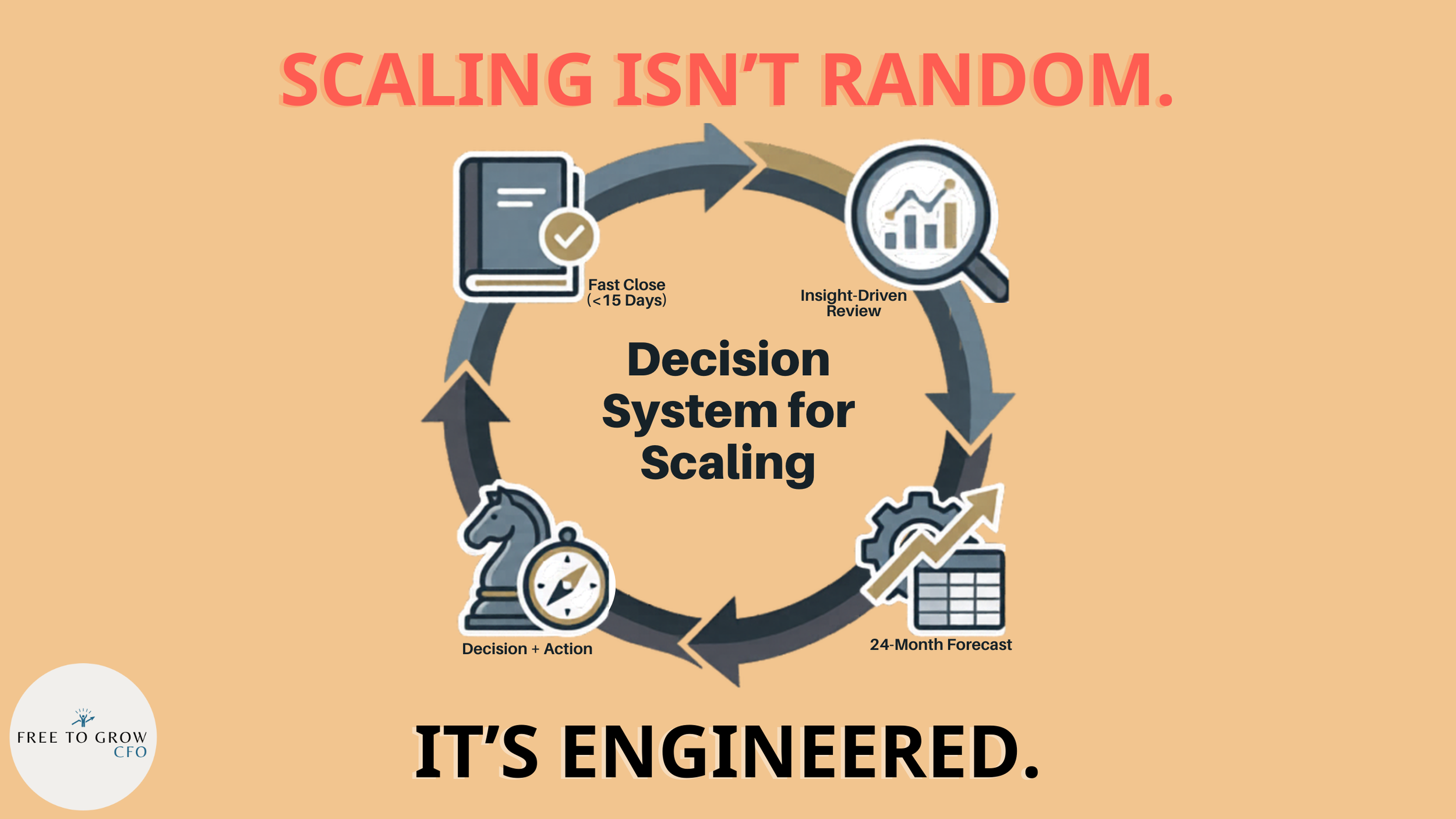
If you’re like most DTC founders, your finance function probably feels… reactive.
Reports show up late. Insights are surface-level. And when it comes time to make a big decision—whether it’s increasing ad spend, placing a large inventory order, or hiring—you’re left relying more on instinct than data.
That’s not a finance team. That’s a scorekeeper.
And in a scaling DTC business, that’s a problem.
Because scaling isn’t random. It’s a series of calculated bets.
Growth is ultimately about making high-quality, risk-adjusted decisions—and surviving long enough to keep making better ones.
The difference between brands that scale profitably and those that stall (or worse, run out of cash) often comes down to one thing:
The quality of their financial system.
Let’s break down what an effective finance function should actually be delivering every single month—and why it matters.
1. A Fast, Accurate Close That Drives Clarity
Speed matters.
If your books are closing 30+ days after month-end, you’re making decisions on outdated information. In DTC, where ad performance, inventory levels, and margins shift constantly, that delay is costly.
An effective team closes the books within 15 days—and not just for compliance.
They deliver:
Accrual-based financials (so revenue and expenses are matched)
An analysis-ready P&L that clearly shows contribution margin (revenue minus variable costs)
This isn’t accounting for accounting’s sake. It’s about giving you a clear answer to:
“Are we actually making money on what we sell—and how does that scale?”
Without that clarity, every growth decision is a guess.
2. A Monthly Financial Review That Tells You What to Do
Most founders get reports.
Very few get insight.
A strong finance team doesn’t just send numbers—they interpret them. Every month, you should receive a structured financial review that includes:
Budget vs. actual performance
Margin analysis (gross, contribution, net)
Ad spend profitability analysis
Overhead and profitability trends
Cash flow drivers and working capital insights
But the most important part?
Actionable takeaways.
Not 20 pages of data. Just:
The 3–5 most important insights
Clear recommended actions
Because the goal isn’t to understand the business better—it’s to run it better.
3. A Living Financial Model That Looks 24 Months Ahead
Most brands operate with a backward-looking mindset.
Elite operators don’t.
They use a rolling 24-month financial model that gets updated every month based on actual performance and the latest available data.
This model includes projections for:
Profitability
Marketing performance
Cash flow
Balance sheet health
Why does this matter?
Because it answers the real questions founders have:
Can we afford to double ad spend and still be profitable?
How much inventory should we buy—and when?
What happens if conversion rates drop?
Will we run out of cash if _____?
Instead of guessing, you’re making decisions with forward-looking visibility.
That’s how you scale without blowing up your profit and cash flow.
4. A Monthly Strategy Meeting That Connects Vision to Reality
This is where most finance teams fall short.
The real leverage comes when all of this is brought together into a monthly strategy meeting.
This is where your financials, your projections, and your ambitions intersect.
Each month, there should be a dedicated Financial Strategy Meeting focused not just on what happened, but on what to do next.
As the founder, you bring your ideas—scale ad spend, launch a new product, hire key roles, invest in inventory. Your “wish list.”
Your CFO’s job is to take those ideas and pressure-test them against financial reality.
Can the business support this? What does it do to cash flow? What risks are you taking on?
And if the answer is no, that’s not the end of the conversation.
The real value is in understanding what would need to be true to make it work. That’s how you turn ambitious goals into executable plans.
This kind of closed-loop system—review, analyze, project, strategize—is what allows a brand to iterate, improve, and scale without putting itself at unnecessary risk.
Why Most DTC Brands Struggle Here
The reality is, most finance teams were never built for this.
They’re structured around bookkeeping and compliance, not decision-making. Which means founders are left trying to bridge the gap themselves—without the time or the tools to do it effectively.
That’s when you start to see the common failure patterns: overcommitting to inventory, scaling ad spend without understanding contribution margin, or growing revenue while quietly burning cash in the background.
It’s not a growth problem. It’s a financial system problem.
What Changes When You Get This Right
When your finance function operates this way, everything tightens up.
You move faster because you trust your numbers. You take smarter risks because you understand the downside. You stop reacting and start operating with intention.
And over time, that compounds—not just into better business performance, but into real wealth creation.
Where Free to Grow CFO Comes In
This isn’t theoretical. This is exactly the system we implement at Free to Grow CFO.
We don’t just “handle your finances.”
We build a closed-loop financial system that:
Delivers timely, decision-ready financials
Surfaces the insights that actually matter
Models your growth before you execute it
Helps you place smarter, risk-adjusted bets as you scale
Because at the end of the day, scaling a DTC brand is all about making better decisions—consistently.
If your current finance setup isn’t helping you do that, it’s not just underperforming.
It’s holding you back.