Podcast: Real DTC Stories: Scaling Chubbies to $100m+
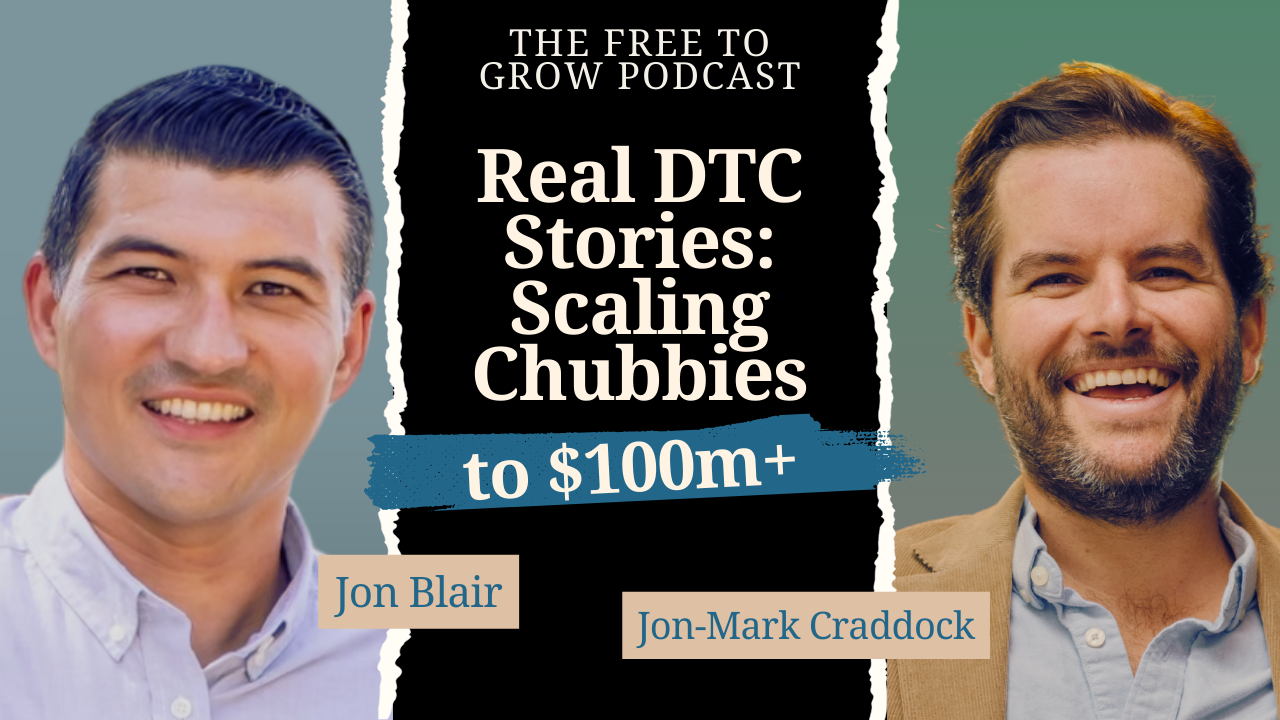
Episode Summary
In this episode, Jon Blair interviews Jon-Mark Craddock, the owner and CEO of La Matera, discussing his journey from being the first employee at Chubbies to running his own e-commerce brand. They explore the challenges of scaling businesses, the importance of proactive supply chain management, and the decision-making process behind self-fulfillment versus outsourcing. Jon shares insights on demand planning, financing through SBA loans, and the lessons learned as a business owner. The conversation emphasizes the need for adaptability and strategic thinking in the ever-changing landscape of e-commerce.
What You’ll Learn
Adaptability is key to surviving as a founder.
Self-fulfillment can save money but requires more time and effort.
The importance of proactive problem-solving in supply chain management.
Building a lean team can lead to operational efficiency.
Episode Links
Jon Blair - https://www.linkedin.com/in/jonathon-albert-blair/
Jon-Mark Craddock- https://www.linkedin.com/in/jonmarkcraddock/
Free to Grow CFO - https://www.freetogrowcfo.com/
La Matera - https://lamaterashop.com/
Meet Jon-Mark Craddock
Jon-Mark Craddock is a seasoned ecommerce operator and the current owner and CEO of La Matera, a premium accessories brand known for its handcrafted belts that blend South American craftsmanship with timeless design.
With well over a decade of experience building and scaling consumer brands, Jon-Mark got his start as the first employee at Chubbies Shorts and later held key roles at Marine Layer and Tuckernuck—three names very much known in the DTC space.
Today, Jon-Mark leads La Matera with a focus on capital-efficient growth, operational excellence, and timeless brand storytelling. Under his leadership, the company has sharpened its supply chain, deepened its customer relationships, and expanded its product line—all while staying true to its roots in craftsmanship and authenticity.
He lives in the Texas Hill Country with his wife and two daughters, where he continues to build businesses rooted in craftsmanship, family, and entrepreneurial grit.
Transcript
~~~
00:00 Introduction to Jon Mark Craddock and His Journey
03:14 Scaling Challenges in E-Commerce
05:58 Proactive Supply Chain Management
09:06 Self-Fulfillment vs. 3PL: Making the Right Choice
12:05 Tech Tools for Fulfillment Operations
14:53 Demand and Replenishment Planning Insights
17:48 The Importance of Flexibility in Business Planning
20:42 Reflections on Lamatera and Future Goals
23:26 The Drive to Entrepreneurship
25:53 Financing the Business Purchase
36:52 Transitioning from Operator to Owner
42:03 Navigating Challenges as a Founder
43:44 Expanding Fulfillment Services
Jon Blair (00:00)
Hey everyone, welcome back to another episode of the Free to Grow CFO podcast, where we dive deep into conversations about scaling a profitable DTC brand. I'm your host, Jon Blair, founder of Free to Grow CFO. We are the go-to outsource finance and accounting firm for eight and nine figure DTC brands.
All right, today I'm joined by one of my fellow Texas Hill Country homies, Jon-Mark Craddock, JM, JM talking to JB, owner and CEO of La Matera What's happening, man?
JM (00:29)
Nothing much, glad to be chatting with you for sure. This is probably gonna be an easy conversation, because you're one of the bros.
Jon Blair (00:36)
Yeah, I know I'm gonna probably have to keep us on track more than find things to talk about. ⁓ Well, I'm stoked to chat. Like, Jon and I have like a really interesting background. We share a first name in many ways. I'm JB, he's JM. We're both, I guess we're both kind of officially the first employees at the respective e-comm brands that we...
JM (00:41)
Yeah. No, no. What I never said.
Jon Blair (01:02)
help scale, me at Guardian Bikes, you at Chubbies. have both since started other businesses. So I guess before we dive into kinda talking through the meat of the conversation, which will be around many of the lessons learned of kind of the multifaceted background that you have, tell everyone a little bit of your, just like your story, where you came from, how you got to Chubbies, and then where you're at today with the businesses that you run today.
JM (01:28)
Yeah, totally. Yeah, thanks again for having me, man. I appreciate am JM. was like John said, I was the first employee of Chubbies
We, the guys, were four founders of Chubbies and they started it back in 2011. And I came on as a intern summer of 2012. And that summer is the summer that we went viral. Like everything just kind of like went to the moon that summer. And during that time, I was handling all of our customer service. We were all doing everything during that time.
Jon Blair (02:01)
Yeah, yeah.
JM (02:02)
whatever had to be done was done. But whenever it went to the moon, the guys were like, hey, we don't want you to go. I'm originally from South Carolina and founders of Chubbies were Stanford grads and we started the company over in San Francisco. So they were like, yeah, we don't want you to go back to school. So I actually quit school, didn't go back, like, like had some type of conviction that this short shorts company was going to work out. And
Jon Blair (02:04)
You
Hahaha
JM (02:26)
10 years later, I definitely did. was great for sure. yeah, so I cut my teeth at Chubbies doing all things customer service, retail, real estate.
anything that needed to be done was done. I was there for almost 10 years. I then went to Marine Layer, built a bunch of stores and did the real estate game at Marine Layer Then went over to Tuckernuck who was having, it's a, know, behemoth ladies, e-commerce brand out of DC. They were having some operational complexities like everybody in COVID. And so I went over to help them out on the fulfillment and supply chain.
side. I was there for almost two years through COVID. I tell everybody it's my like MBA of like supply chain. Insane. 100%. Totally. It was like, it was insane. So, so that was an awesome experience. During that time, we were lucky enough to sell Chubbies. I parked up some cash and yeah, I used that a little bit of that money to buy La Matera and now we're in full on operating our own brand. It's pretty fun.
Jon Blair (03:10)
Yeah, no, PhD, PhD. I got a PhD in supply chain during COVID too.
Hell yeah. Dude, I actually am not joking you. When we were, you know, I was operating as COO and CFO of Guardian Bikes during COVID. And so my supply chain team, I had like a VP of product who was really involved in supply chain because we made everything in China. And so like those relationships and the manufacturing process was key. And then a VP of supply chain and then a couple operations managers. And everyone was so burned out from just like, we just had to get on calls whenever a call needed to be gotten on because
Just weird, like, can we, is this container gonna get rolled? Can we get on this truck? Can we get on this train? And the, it's funny you mentioned the MBA thing, because the way that I rallied the troops when they were like super tired was like, hey guys, you're getting this once in a lifetime opportunity to get a PhD in supply chain operations. Like, you're gonna learn more for however long this thing lasts for. You're gonna learn more in this period than you're probably ever gonna learn about supply chain. So that was how I kept.
That's how I rallied the troops, you know.
JM (04:32)
Yeah.
I couldn't agree more. had, I mean, endless crazy fires that we had to put out. probably the biggest one, the one that I was most helpful in is their 3PL was this kind of like mom and pop 3PL. They just couldn't handle the volume. They were growing at, I don't know, 150 % year over year at mega numbers. It was insane. And so they had something like two or three months of returns backed up, unprocessed in Gaylords.
It was just a mess. I was the guy to come in. I like, all right, we got to do something different. And I think it was 11 or 12 weeks, 60 full trucks later. We moved everything to Ohio just in time for...
Jon Blair (05:15)
my gosh.
JM (05:19)
peak launch first week of November. It was like insane. And it was COVID too. So I was ripping from Austin up to Ohio where our 3PL was. And I would have full planes by myself Monday morning to like, it was weird. Like it was just me and like maybe two other people on a full plane. Just like, yeah. Yeah. You got it. Yeah.
Jon Blair (05:36)
pilots were letting you fly, let fly the plane. Hey man, you want to come?
JM (05:41)
It was insane. It was like, was, was insane. So, but awesome experience. I mean, I love, I love all those folks so much to this day. They're, they're great. ⁓ they're great folks for sure.
Jon Blair (05:52)
So let's talk about something that I think is super real for so many brands that I encounter. You're scaling really fast, right, and we see a lot of brands like their supply chain or even their fulfillment network or process or provider, it just starts breaking. So like, with the experience that you have under your belt, just start going through some of the things that come to mind. Like a brand's like, hey, JM, I need some advice about what to do.
proactively so that my supply chain or fulfillment network doesn't break down. What are some of the first things that come to mind?
JM (06:23)
Yeah, I mean, I'm big on just jumping in and taking on the reins like immediately whenever I see a problem. Like I think that's my biggest thing is like, I don't really like to let things fester. Like you're just gonna cause more problems for yourself. And so think my biggest, you know, that I would say on that front is like, if you see a problem, yeah, like try to be partners, with a, you know, a 3PL or whatever it is, wherever the problem try to be good partners, go to them with a resolution, be like, all right, like you're going to have a month or two months to like, but we got to get this right. Like we got to right the ship but if you start seeing, seeing problems that they're just not being solved. think you have to trust your gut and just go with it like immediately.
and find the solution out of I think a good story personal experiences, whenever I bought La Matera, we were in a 3PL. We inherited a 3PL relationship. And I felt bad for him because I was going, it was this 3PL out of Salt Lake City and I was coming off of a beautiful 3PL operation with Tuckernuck and I went to them right out and I was like, unfortunately, this is
where height of my like, you know, experience is gonna come with this transition. And I was like, we got one month to write these SLAs and write everything. If not, I'm gonna fly my happy tail to Salt Lake City. I'm gonna pack my belts up in a U-Haul and I'm gonna drive it back to Austin. I'm gonna run my own warehouse. And I was like, and I don't think they really thought I was serious. yeah, like.
Jon Blair (07:46)
Yeah believed you, they didn't believe you. I would have believed you knowing you, I would have believed you.
JM (07:58)
is EGGLE.
100 % I don't think and sure enough like we got to the end of I think that was the end of September I had met with them like pretty much every other day They weren't they weren't righting the ship and I was like I can't I like I can't continue running something like this like right before q4 and so sure enough I flew to Salt Lake City. I got myself a u-haul. I packed the belts up myself drove back here We were down maybe a day and a half and we were ship clean You know two days later and just like completely awesome
operating which now we're sitting in our own fulfillment and warehouse over in Spicewood.
Jon Blair (08:35)
That's so awesome, man. Man, I have so many follow up questions on that. Let's actually segue, that's a nice segue into talking the decision. Now, obviously you yourself are very proficient at like warehousing fulfillment and operations. But like if you're talking, if the average brand founder who's using a 3PL is considering the decision of like self-fulfilling, right, versus keeping that outsourced.
What are some of the real things that they need to like consider before deciding to take that on?
JM (09:05)
I mean, what I will say is you will save money doing the fulfillment yourself, but you will not save time. And so like everything is a scale, right? And so I
Jon Blair (09:11)
Mmm.
JM (09:16)
I love having the control of our inventory and I love having it on hand something happens, Jon, you say, hey, I'm going to meet my father-in-law tomorrow night. I swing by and grab a belt, like a gift for him? I can just make that happen immediately. If all of our product is sitting in Salt Lake City, it's a little bit harder for me to do things like that. And so I would say
You would like a good a good percentage of gross revenue probably and you would know better than I do with all the brands that you see, but I would say probably in between like somewhere around 10 or 12 percent goes to fulfillment and parcel and shipping fees and all that kind of good I am I mean, I have my P &L for this year. Our shipping line is like five.
.75 percent like it is like it is super low. So you will save money. But like the trade off is you have more headache. You have people to manage. You have a physical space. You have like you are controlling your ins and you don't hit your own, like you don't set up a process and hit your own SLAs, then it's your fault. So like you can't just go to a 3PL and be like, hey, fix this because you're you know, you're you're you're the guy. So
Jon Blair (10:22)
for sure.
Yeah.
JM (10:29)
I think that's my biggest thing is like while yes, you will save money, you will definitely like have more things to deal with.
Jon Blair (10:37)
Well, and I think as a kind of more generalized framework or best practice to draw out from that, it's like what core competencies do you want to be managed in-house by your brand? It's not the same for every single brand, right? And honestly, part of it is what you should manage, and part of it is what you want to manage. Part of being an entrepreneur and starting a brand, right, or buying a brand is like, I want control over the journey. And it makes perfect sense for a guy like you
with your background and the areas of passion that you have, like, no, we're definitely gonna run our own warehouse, right? Like, there's no doubt about this, right? But someone who is more product-centric or marketing-centric in their core competencies and kind of like the early team that they built or the problems that they wanna solve, right? Like, then, yeah, considering outsourcing fulfillment could make a lot of sense. I'm curious to get your opinion on the keys to kind of like the tech, the WMS, like,
JM (11:09)
Yeah. Totally.
Jon Blair (11:32)
What are some of the things that a brand needs to think about when they're considering the right apps or applications to use to actually run the fulfillment operation?
JM (11:41)
Yeah, I mean, it really, like, I think it would go back, like...
You can spend any amount of money on everything, right? Like you can get really aggressive and it kind of goes back to like what your goals are like it like if you're if you're in a hyperscale business that you're like you're you're taking this to like 100 200 million in revenue like for god's sake give it to a 3PL that has experience with like hyperscaling, right? My goal. Yeah, my my goal with like My goal with lamatera is to grow it like I don't know a happy five to fifty
Jon Blair (12:05)
for sure.
Yeah
JM (12:14)
I'm done. I'm good on that. Like I'm good. We'll see. Like I have two young kids. So like we'll see if the juices get flowing. You know, I don't know.
Jon Blair (12:24)
Hahaha
JM (12:25)
Three or four years from now if I want to really go for it, but I think that's that's the first question It's like alright. What is my goal with this like are you trying to run slow? Build a lifestyle business or you taking it to the moon if you're taking it to the moon go 3PL We're out there's they're gonna be pros They're gonna get you there and you'll pay a little bit, but you'll get they'll get you there
Jon Blair (12:34)
Totally.
JM (12:46)
If you want to run a business like I do, which I want to be super lean and any dollar I save in La Matera is going to go back to me, ultimately, I think you could be pretty frugal. And so I think for our systems, have like ship station, like super easy ship station, obviously Shopify.
And that's essentially it. We use some back end kind of organization through Google Sheets and all that. But it really is not complex. Like it's not like it's not hard to kind of get, you know, your product in and ship it to your customer. And then, I mean, these days with with, you know, ShipStation in particular, and I'm sure any of these like little shipping apps.
They have their own rates and they're well negotiated. like, you know, bundle up all of their, you know, all their volume to, get the best rates as well. So I'm finding like I couldn't with our volume, I can't go to DHL like I could at Tuckernuck I can't go to DHL and be like, Hey, give me a 30 % discount. But ship station, like for a small brand, like, like us, like they did, they have a pretty well, like well negotiated rate that we just can kind of tap right into.
Jon Blair (13:41)
for sure.
Okay, so the next thing I wanna talk about is like demand and replenishment planning. This thing, this is, you know, I'm sure between like the hyper growth that you saw at like Chubbies and Tuckernuck and then also what you're seeing more stable growth at La Matera, you've kinda seen both sides of the spectrum, right? So let's start first on like the fast scaling side of things. And maybe, I don't know, like, I'm not sure if Chubbies was launching products, new products super frequently or not, but like, but yeah, yeah.
JM (14:17)
every week. Multiple times.
Jon Blair (14:19)
Okay, so you
JM (14:20)
Yeah.
Jon Blair (14:20)
got a fast scaling brand, you're launching new products. I wanna go through some of the best practices and the myths around like sound demand and replenishment planning in your opinion.
JM (14:30)
Yeah, I mean, I would be candid and say, like, we probably didn't do this great the majority of the time that I was at Chubbies. It was like the classic, like, we would over invest in inventory, we would have a shit ton at the end of the year that we'd have to liquidate. And then we would under invest. And it was this like massive pendulum all all the time. So.
Jon Blair (14:45)
Yeah.
JM (14:51)
Yeah, I would say we probably didn't do, well, we did a great job, obviously, but like, was the massive pendulum shift that was always happening.
And I was on the opposite side. I wasn't on the demand planning side or anything like that. And so in a hyperscale company is similar to the conversation we were just having with 3PLs is like, if you were going to the moon, hire the right people and hire gangsters in there and put them in their seat and let them do like, just let them cook. Like I, some of it, I remember some of these like kind of like big demand planning minis to this day. And there was one, there was one, there was a bunch
Jon Blair (15:12)
Yeah, for sure. Yeah.
JM (15:26)
a bunch of gangsters at Chubbies, but like there was one gal in particular who was over demand and I was like, I would just sit there and be like flabbergasted by how epic she was. I was like, this girl is a beast. Like I was just like, she was, she was a gangster. And so I think that it kind of like, it kind of goes into it. Now I'm at La Matera I handle demand myself and you know, basically like in a company like ours, we just spend the amount of money that we can. And
Jon Blair (15:37)
Hahaha
JM (15:55)
that is the like max we can do. And so like, that's a that's the that's the only thing like we have and I think we'll kind of go into this next probably good segues like we have an SBA like we bought the business with an SBA loan. And so every single month we have a SBA bill due and we got to pay that bill and money that's left over we can use for growth or whatever pay ourselves and do whatever we want with it. But I think that's where I'm at now on a like kind of smaller like, you know,
scale I would call it happy scale versus hyper scale we are we just buy the inventory that we can that's kind of like that's where we're at
Jon Blair (16:24)
Haha.
Ha
For sure.
Well, the reason why I wanna ask you this question and get like, I like asking this question to people who've experienced it firsthand, because I did, I oversaw demand planning for most of the time that I was at Guardian Bikes. And yeah, it's very imperfect and we were always wrong. And I've started to realize that it's not about, it should, the baseline, kind of math, you should root it in some sort of historical data. Cause if you don't, then it's literally just 100 % a guess. Right now, but I want to be clear. There is not a system, whether you're talking about a software system or a framework or or a mathematical system that will give you the perfect quantity to purchase. Right. It's yeah, please. I will pay for it with an SBA loan. ⁓
JM (17:01)
Ganger in the wind. Totally.
If you find that system, I will pay for it. Literally, 100%. 100%.
100%.
Jon Blair (17:24)
⁓
I wanna say this, because one thing I think is really important about this podcast is that we're candid, right? There's so much stuff in e-comm that's sensationalized, man. The next new AI app, frickin' the next marketing agency who's gonna crush it for you. And like the reality is, I actually think this is a universal truth in business, but like I'll speak to it in the e-comm.
Inventory based business context is that like you're making these inventory planning decisions just like all of the other decisions you're making with imperfect information, right? And whatever system you use, whether that system is manual or automated or software based, it's all to give you directional accuracy, right? And what's more important than anything is assessing how risky the bet is that you're placing, not scoring the
accuracy of it or assuming it's gonna be all that accurate because rule number one of forecasting is every forecast is wrong, right? But as I'm sure you've learned over the years from all of your experience and what we're starting to try to do more and more at Free to Grow CFO is like, look, we're not here to give you the right answer because we're gonna give you the wrong answer, but we're here to help you assess how risky this bet might be, right? And then you recalibrate the bet according to
the risk that you are personally willing to take that's in alignment with your goals and your guiding principles.
JM (18:48)
And I think it's about like a
regular recalibration too. Like I think that's where the success lies. It's like, yeah, you said whatever in January. Like, great. Like good luck nailing what your yearly goal is gonna be. ⁓
Jon Blair (18:51)
Totally.
Yeah
JM (19:02)
But like you just have things that happen. I mean, it seems like these these days, like every other day, some weird thing is happening that like shifts markets or like does something weird. Tariffs come and now tariffs are away. Now tariffs are back. Like you just have to like you just have to hold on and like just make the best call you can. But I agree that like you want your you want to set your direction like early. You want to have the like, you know, you want to have the framework. You want to have your thoughts.
Jon Blair (19:27)
Totally.
JM (19:30)
figured out and sit down and make sure you're making a thoughtful decision. But then the regular reassessment is like, think that's where the magic happens for sure.
Jon Blair (19:41)
Well, you know what I'm starting to find, man? Like more and more as I grow my own businesses and I also, you know, at Free to Grow we're helping, you know, dozens of brands at a time grow their businesses. Goal setting or any form of planning. Planning is really important, but not because it's going to create the exact desired outcome that you think it's going to. It never does. It's actually more about finding a planning or goal setting journey.
that you're willing to just be on for the rest of your life. And like you said, revisit it frequently. And I think I'm starting to learn the faster your business is growing, the more frequently you have to revisit it because the faster things are changing. The slower it's growing, you might be able to revisit it less frequently because the velocity with which things are changing and complexities being out of the business is much lower. I was listening, I can't even remember who it was. I was listening to someone's podcast a couple of months ago.
and he's like some sort of like a, you know, like an executive coach or something, but he's like, man, I'm like in my 50s now, and I'm starting to realize, I'm starting to tell people, like, I don't set goals anymore, I trial goals. And so what I'm saying is that like, I still define them, but I'm now, I hold them with like an open hand instead of a tight fist, because when I hold them with an open hand, I can say like, I can ask myself the question like,
is this still a good goal or is it not anymore? And I give myself the permission to revisit it through the lens of what I've learned since I originally set the goal. And when I say like I'm trialing it, I'm willing to change it, but I don't just change it for no reason. I change it for a good reason, right? And so anyways, that's just something that comes to mind as you're talking through that. I wanna talk next about La Matera. So you help scale several brands.
Starting with Chubbies ending, what was the last one before La Matera? Tuckernuck ?
JM (21:29)
Tuck her in up. Tuck her in
up. Yep.
Jon Blair (21:31)
You have an exit at Chubbies and you buy La Matera. So before we get into how you executed that, what was the drive in you personally that was like, wanna buy my own e-comm brand?
JM (21:45)
I even, I just consider myself kind of like unhireable. I'm just like not really a good, like I wanna be like.
Jon Blair (21:51)
Yeah
JM (21:54)
taking the reins and I like all of my managers to this day probably are like, thank God that guy just got at the head of a company because like he does not need. Yeah, because I would always I was a knucklehead. just wanted to like I wanted to make the calls. Right. And like and the bad came. I wanted to take the bad. If the good came, I wanted to take the good. And I think that's how I've been literally my entire life. And so it was was it was definitely the right move. mean, we like whenever I started, we got to
the end of peak 2022 at Tuckernuck and it was a crazy, crazy time. Like they were in insane growth and that's whenever I really knew I was like, all right, like it is time for me to step away. Like I, I, I, at that time I had a six month old at home. Like it didn't make exact sense if you were like, you know, apering it up. Um, but I knew it was, I knew it was time and we, we, uh, I let the, the gals at Tuckernuck know
towards the end of December after peak and basically like kind of phased out over the next like couple months hired my replacement did all that kind of good stuff in first week of March
hit, I left and La Matera popped up on a business brokerage site two weeks later. was like perfect timing, perfect situation. I knew the brand already. They followed me on Instagram randomly. It was like all pointing towards the right thing. But to get back to your question, it's like, I knew, I knew I wanted to get out there and build something or buy something. Like I was like for, I don't know, for two years prior to that, I was on all the brokerage sites. I was on all the things I was like trying to figure out. was playing around with.
with creating a work wear company. I was doing all kinds of things just to figure out my way out. Because I knew that's where I needed to be. I just knew in my heart.
Jon Blair (23:41)
So I wanna talk a little bit about how you kind of financed and executed the purchase. This is like really, really interesting. It's something that I'm personally interested some point as well. like, you know, I think there's, for me, when we think about like buying assets, right, with money, your own or other people's.
there's kind of three that are interesting to me. one is real estate and one is businesses. The third one, you primarily use your own money, is just like investing in the stock market, right? I think of the stock market as the kind of like the sum allocation of your money, just set it and forget it, right? And just like, I've got this 55 % in the S &P and whatever, 40 % in the NASDAQ or small caps and the rest in like an international index fund. So let's just set it and forget it. There's not much.
not much entrepreneur or like entrepreneurial about that. Then there's buying businesses, buying real estate. You chose to buy a business. Talk to me about how you guys, like how you financed that purchase.
JM (24:43)
Yeah,
yeah, mean, it was it was crazy. So when we got it, like we mentioned, we got an SBA loan. I'm a huge proponent of the SBA program for first time business buyers like it like, yeah, I had track record of like operating at companies, but I didn't have track record running one or buying one.
anything like that. And so that's the beauty. I think it's just the US and Japan are the only two like countries that have somewhat of a similar situation where you can like get an SBA or kind of government backed loan to purchase the business. So I think that's the that's the big way that we we purchased it. Obviously, I had a stack of cash from Chubbies that I threw in and then I had just buddies that like we let her sit on our cap table. And so we ended up I think we ended
up putting... oh man it's been my brain's not where it used to be I think we ended up putting something like 16 % down or something but you you basically put in between 10 and 20 % down and
It's an SBA backed loan. So you're working through a bank. But like the SBA has this crazy colonoscopy of a checklist that you have to go through. And it was crazy. It was like a three month like the bank comes at you and analyzes everything for your personal. They analyze all any investor that's touching it. They invest. They analyze the business like it's like it's it's crazy process. So you have to be you have to be a little bit like kind of, you know, fine with
Jon Blair (25:54)
Yeah ⁓
JM (26:15)
chaos to like jump into a SBA situation like that. But I find that like, love, I love the process of going through it. And like, I would, I would kind of, like I said, I left my full time job. So it was for that three months, like that was my full time job. Like I just sat there and I prided myself on answering any call from a banker, lawyer, like any of the cats that are in there, like within five
minutes. Like if somebody sent me an email at Saturday night, like they knew they were getting a response. Like it was like it was happening. And so that was the like process that we went through.
Jon Blair (26:52)
So here's
why the, I actually know a lot about this as well. I've never executed it myself, but I've done a number of SBA deals over the years. like, here's some of the advantages from a finance perspective of using an SBA loan to acquire a business. One, you can get a 10-year term loan, which if you were to get a loan that's not through SBA, typically those are five to seven year terms. And so what does that mean? It just means your payments are higher. So the likelihood,
that the business will cashflow after debt service is a lot lower on a five to seven year amortization schedule than a 10 year, right? The other thing is because it's backed by the SBA, it's generally the best cost of capital that you're gonna get from a lender to buy a business. The other, yeah, you're just not gonna get that buy in a business like, you know, for most people. And then the equity injection, you just have to be able to put 10 % down.
JM (27:34)
Yeah, think ours is prime plus two or something like that. It's like
Jon Blair (27:46)
Assuming, now keep in does need to build a cash flow. And so what Jon was just talking about is that like, and I actually think this is a huge advantage. If you're a first time business buyer, actually the SBA or the lender, whole underwriting is done besides the owners because there are certain criteria that all owners that own 20 % or more have
in order for the deal to be backed by the SBA. the business, basically the payback ability, right, is all based on the target company that's being acquired. And so you actually kind of have in your corner, you have the lender who's doing diligence on the target company on your behalf to confirm that this thing is gonna cash flow. Because actually if it's not gonna cash flow, either you have to put more down.
JM (28:26)
Totally.
Jon Blair (28:35)
to bring the loan amount and the payment down, payment amount down to get it to cash flow or they just won't finance the deal. So interestingly, it's kind of akin to buying real estate. Like I've had times when I'm doing real estate deals where the lender's like, hey, we can't do this deal because this thing's not gonna cash flow. And so I can either put more down and or try to negotiate the price down with the seller. Oftentimes you can get a little bit of both, but it's actually, I think a lot safer
of a way to purchase a business for your first time because you have this third party in the lender who's actually helping you do a lot of the diligence that you may or may not do a good job of otherwise on your own, right? totally. Or you don't, it doesn't get approved, right?
JM (29:14)
Totally. it makes you sit down and do it like you have to do it like you have a
Literally, you have a check. They have a list of 300 checked boxes that you have to do. And so I think that's like that's a perfect like otherwise you may like you may get too emotional and you're like, all right, like I just really want this business and I've been going at it for so long. And like you may make a bad deal. And especially for the first one, it just like forces you to really think about it, you know. But I think it and if we're talking about like SBA, sorry to cut you off. It's like.
Jon Blair (29:38)
Totally.
So.
No, no,
go again.
JM (29:47)
I in a spirit of like what we were talking about earlier about oversensationalizing it. Let's talk about the bad as well, because there is some annoyances like one, the PG. There's a personal guarantee like luckily in.
Jon Blair (29:54)
For sure, for sure.
And you can't, by the way, you
can't negotiate that out. That's actually the SBA SOP that the lender has to follow. That is not negotiable. I know that for a fact.
JM (30:08)
Totally.
Yeah.
think the one thing that got me a little bit more comfortable with it is, yeah, like if we go belly up, that would really suck. But in Texas, and probably other states, but in Texas, they can't take your house. at least my kids will have a house to live in if we belly up. But that's a big one. You gotta have major conviction in yourself and your ability to lead and run a good business and make it happen. So that's a big one. And then the next one is like,
Jon Blair (30:22)
I know.
For sure, for sure.
JM (30:37)
We were talking about the cash flow. Paying a monthly bill that is any kind of sizable bill, it just limits your cash to do anything with growth. And I'm like a opportunistic kind
I know, just like an ambitious person that I would like to grow La Matera 150 % year over year. But there's just like the cash is like goes to the SBA and then anything that's leftover you that's that you can put in the sandbox to play with. And so those two things are in my mind, just like something you really have to like take a look at and like keep in mind when going into a like a deal because if you yeah, they can look at the financials and you
and they can make sure the financials map and like the math maths but you still if you want cash grow any kind of amount you got to account for that SBA like payment every single month you know for that 10 year term.
Jon Blair (31:37)
Well, and that's why like it's really key. mean, and like, like we just said, you can't even get the deal approved by the lender. This isn't the case, but that's why this is a good strategy for a cash flowing business asset, right? Because the one of the rationales forward is that like after 10 years when it's paid off and you don't have that note payment anymore, if the business still cash flows, cash flows cranking at that point, right? And you, and you,
JM (32:03)
Yeah, and you deserve it. You deserve your distrust.
⁓
Jon Blair (32:05)
Well, and you
used it, you use mostly other people's money, right? So the, let's talk about like, kind of like the flip side. The flip side is don't use a loan and you end up raising all equity capital to purchase that business. Then the question is how much of the business do you own at that point, right? That's the trade off. And to be clear, neither one is good or bad, right? This really comes back to like, what are you trying to achieve, right? As the owner.
JM (32:21)
Yeah.
Jon Blair (32:32)
What are you trying to achieve? What are your goals? Kind of like you mentioned earlier, comes back to like, well, what are your goals? And if you, this may, may not be the right strategy for someone who wants to, you know, hyper scale. That's oftentimes why, that's one of the reasons why hyper scale is usually funded at the beginning by equity. Because the theory is financially, you're going to have a smaller percentage of the pie.
but you're gonna build a massive pie, right? And so that your slice is gonna be bigger than, but you have to deal with the complexity and the side effects of the second order consequences of being on a hyperscale journey. I, for one, I tend to side with guys like you for my own personal situation because I've been a part of hyperscale. I now have three little kids and I'm like, I only got so much mental.
JM (32:58)
Totally.
Jon Blair (33:21)
physical and emotional energy to hyperscale. And so there's some sort of a balance. how many years into owning La Matera are you?
JM (33:21)
Yeah.
We, June of 23, so we're two and three or four months, something like that. Yeah, it was June 22nd, 2023.
Jon Blair (33:38)
So what's been the major learning for you personally going from being an operator in someone else's business to being the primary operator in your own business?
JM (33:50)
I, I mean, there's just been so many, so, so many learnings. I don't even know where to start. I think, I think the, like, I mentioned this earlier just putting the gangsters in their seat and letting them cook that's one of, that's been one of my, my biggest learnings is like just having the right people doing the right things.
to have a headcount budget of a million dollars to have a really, really successful team doing exactly what they need to be doing and having a organization. And so I think that's probably my first thing is just like...
We're running a pretty lean ship over here whenever it comes to full-time work. It's literally just me my wife does does some stuff on the warehouse and in wholesale and then then we have pretty much all contractors doing like all the you know the twisting of the knobs and levers in the background and so like I think thing that I've learned over the last two years two and a half years whatever it's been is like
I've injected some buddies in there. I've injected recommendations from friends and all this kind of stuff. And like some of them have gone good. Some of them have gone fine. And I think the way that I'm trying to build this thing is super lean. And so I'm like, all right, I just found this new marketing squad that's handling all of my digital marketing. they are the exact right people that need to be in here doing this. Like they they have a great price and they are extremely efficient and they do the exact right thing.
You know and so like I think it I think that's our biggest learning kind of to date is like I have the right people doing the right things
Jon Blair (35:23)
for sure, man,
and it's key to have the right people for right now, but always be thinking about when you hit a certain whatever size, threshold, whatever you're like, this is probably what I'm going to need when I get there. But then when you get there, you'll also begin to have a much clearer view of what's starting to break, right? And so it's like, and I think the point I'm making is I think founders need to always be
thinking about what they will possibly do, but before making a decision on it. I oftentimes, I was talking with my wife about this recently, they're like, hey, there's a difference between saying, I know I need to do this eventually and acting on it. Or saying, if this happens, then I'll do this. If this happens, then I'll do this. I think sometimes we feel like we have to act on our kind of creative thinking, on our like what if scenarios, right?
And like, I've known things many times in businesses that I've helped scale to this point where I'm like, this is gonna break. I'm not gonna do anything about it right now, because it hasn't broken yet, but I'm gonna keep my eye on it, and I'm gonna keep researching what I'm probably going to do when this thing approaches breaking. And I think that's just important for...
JM (36:22)
Totally.
Yeah. I think you have to
like...
That's one of the things is like, you just have to make those hard cuts and hard decisions. Like you have to make them much faster than, and, and, and, you know, the risk, like the risk isn't there when you're working in a company, like it's somebody else's company. It's like, you know, if you, don't have to act so quick quickly. but yeah, you have to make the, the hard cuts quick, like you just, just get it over with, you know what mean? And I, and I think that's like, that's, that's what we're doing this year. last year.
Jon Blair (36:41)
Totally.
Totally.
JM (37:01)
We invested in a bunch of things. threw money expanding our production do it doing all kinds of like we bought a little belt brand and we did a bunch of stuff with our cash this year. I'm like, nah, there's that shit's weird out I'm holding on to cash and I'm like, I'm figuring out a way be be comfortable. So like we've had to have hard conversations this year, make cuts and really think the like that's literally been my entire
job all all year is just to be like all right tariffs happen supply chain weirdness is happening all this stuff is going on. There's softness and consumer like what how do we like right this ship and so like I may grow like at a smaller percentage on the net revenue this year but my op-ex is just like squeaky clean like it's all right like you you just get in that mode of like all right and then maybe next year things are hunky-dory
and you're like, all right, let's just take all that cash and put it back in OpEx and try to grow and keep on keeping on, you know? So I think you're just trying to do the best you can. That's like the moral of the story. And you just staying alive. That's like, that's your job as a founder. It's just stay alive, Yeah.
Jon Blair (38:03)
for sure.
for sure.
Dude, keep on keepin' on. I always like a quick little Joe Dirt ⁓ plug right there. Life's a garden, dig it, man. Keep on keepin' on. Well, okay, so unfortunately we're gonna have to land the plane here. I got three little kids I can hear screamin' outside that are waitin' for me to go make them dinner. But really quick, one last thing that we didn't get to.
JM (38:18)
Yeah.
Yeah, exactly right.
Jon Blair (38:35)
You guys, am I correct that like in addition to your own fulfillment, do you guys actually do fulfillment for a few other brands as well?
JM (38:42)
That's right. Yeah, we it's small operation. It was mostly just opportunistic after all of the tariff situation. So whenever all this stuff started bubbling in January, February, March, I'm a part of an online group called Ecommerce Fuel.
great group if anybody's looking for kind of like an online forum type situation. there were people just freaking out. I mean, luckily, all of our production is made like either in Argentina or the majority is up in like the Northeast. But there's a lot of folks who had 100 % in China or either like India or somewhere like that that just got totally worked. And so people were...
freaking out a little bit. And so I had extra space in our warehouse and I was like, I have a good operation going on here. So why not just kind of take on some, some brands and like do a little kind of like co-warehousing kind of like mini 3PL type situation. so yeah, we, have a couple brands in here that we, that we handle and just get their stuff out the door as well.
Jon Blair (39:42)
Awesome man, well where can people find more information about you or La Matera or even your warehousing and fulfillment business?
JM (39:48)
Yeah, I'm pretty much at lamatera.com. That's the easiest place to go. If anybody wants to get in touch with me, just shoot us an email over at hello @ lamaterashop.com and somebody will get in touch with me for sure. But I'm on all the things, LinkedIn, Twitter, all that kind of stuff. Just look for Jon-Mark Craddock and you'll find me.
Jon Blair (40:06)
Hell yeah, man. Well, this one was fun. feel like we only got to like less than half of what we could have talked about. We're gonna have to have you come back. ⁓
JM (40:10)
Classic. Yeah. I'm here. I'm here anytime. I also, think we should do like a carve off podcast of like, business owners with kids under five and how they are alive. Like we should just, we should just like interview people with like who's bought businesses and has a three year old. That would be hilarious .
Jon Blair (40:21)
Dude, yeah, now they are alive.
I mean, I am actually totally down. have this secret kind of plan that at some point, I don't know if it's while I'm doing Free to Grow, maybe at some point I'm not doing Free to Grow anymore, but it's this, ⁓ it's the dad yourpreneur podcast, the dad yourpreneur show. So maybe that's it. Maybe this is the sign that we got to start the dad yourpreneur show. ⁓ It is, yeah, damn it. And then you're to freaking, you're going to, you're,
JM (40:48)
Yeah, I love it. I'm in. ⁓ 100%.
dude yeah I'm buying the domain right now
Jon Blair (41:01)
You're going end up, you're going to end up price gouging me to buy it back. I
love it, man. Well, thanks for joining, dude. This was a really great conversation. And, ⁓ and I think I, I think I'm probably gonna have to have you back on again. And, ⁓ and, if we do start the entrepreneur podcast, that'll be a plug in the Free to Grow CFO podcast shortly here. But, yeah, thanks for joining dude and look forward to chatting again soon.
JM (41:21)
Likewise, man, appreciate you.
Jon Blair (41:23)
Don't forget, if you liked today's episode, please hit the subscribe button wherever you're listening and leave us a review. It helps us reach more people like you. Also, if you want more tips on scaling a profitable DTC brand, follow me, Jon Blair on LinkedIn. And if you're interested in learning more about how Free to Grow CFO can help your brand increase profit and cashflow as you scale, check us out at freetogrowcfo.com.