Podcast: What Is a Good CAC Payback Period for a DTC Brand?
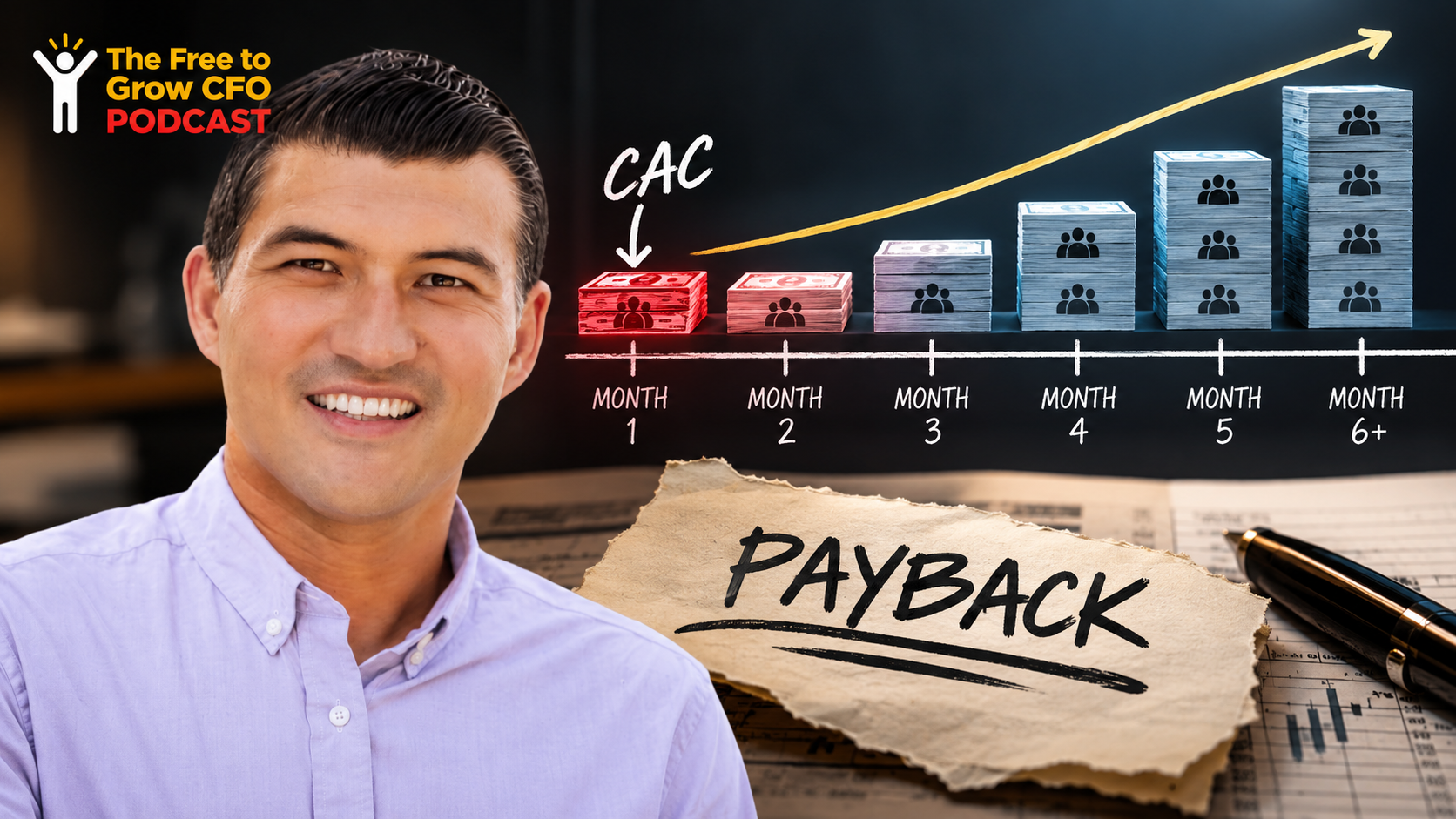
Most founders ask how long their CAC payback period should be, but the right answer depends on the game you’re playing and how old your brand is.
In this mini episode of The Free to Grow CFO Podcast, Jon Blair answers one of the questions he hears most from brands: when should my CAC get paid back? He walks through the benchmarks for each growth marketing game, from new customer dominant brands that need to be profitable on the first order, to apparel brands that may break even around month two, to high LTV and consumables brands that generally pay back in three to six months. Jon then explains why smaller, bootstrapped and founder-funded brands usually need a shorter payback window, and introduces the “layer cake” of retention: as more years of cohorts stack up and keep repurchasing, you can fund a bigger new customer loss and push your payback period further out.
This one gives bootstrapped founders a clear way to decide how much new customer loss their brand can actually afford.
Key Takeaways
New customer dominant brands need to be profitable on the first order.
High LTV brands generally need to pay back CAC in three to six months.
Smaller, bootstrapped brands need a shorter payback window.
Layers of cohort retention over the years fund a bigger new customer loss.
Strong retention is what lets you extend your payback period as you scale.
Transcript
~~~~~~~~
00:00 Understanding CAC Payback Periods
02:52 The Importance of Customer Retention
Jon Blair (00:00)
Welcome back to another mini episode. Today I'm gonna answer a question that I get from brands all the time. When should my CAC get paid back?
Another form that this question comes to me in is how long should my CAC payback period be? Well, if you're a new customer dominant brand, your CAC payback period should be in the first month. You cannot afford to not be first order or new customer profitable. For an apparel brand, if you have enough LTV that compounds over a one, two, three, four year period, you may be able to break even on new customer acquisition.
Maybe you get paid back by month two. But if you run a high LTV or consumables brand, generally speaking, your CAC should be paid back in three to six months. Now there's some nuance here, and we're gonna camp on this high LTV CAC payback scenario for the rest of this discussion. When your brand is smaller, you probably need to pay back your CAC sooner.
You probably need to make a given cohort profitable sooner rather than later. Why? Because unless you have huge capital reserves, which most of the brands we work with don't have huge capital reserves. Why? Because most of them are bootstrapped and/or founder funded. So if you're bootstrapped and and/or founder funded, that means you don't have a lot of excess capital on the balance sheet to fund new customer losses. So that means your payback period needs to be shorter. You need to turn a profit faster.
On new customer cohorts acquired. Now, this can evolve over time. This can go from maybe necessitating in your early days, needing to pay back your CAC in say two to three months, that over time, let's say in your two, year three, year four of your brand's existence, if you continue to have strong retention and you still have cohorts from one year, two years, three years, four years ago.
That are showing strong repeat purchase and retention, you may be able to push out your CAC payback period from say month two to then three to then month four, then five, and maybe settle in month six to seven. But the bottom line is the way you should think about this is layers on a cake. You ever seen a layer cake? So in the early days, when you're just getting started, the only layer you have on your cake.
Of repeat purchase from customers is the the first earliest cohorts that you acquire. So your cake only may be, you know, this high. That's how much is available to cover new customer losses. Now, if you get out to year two, year three, year four, you may have multiple layers on that LTV cake. What does that mean? It means you have multiple years of cohort retention, of customers coming back and repeat purchasing from you.
That can offset the losses of today's cohort. And so think of it as the more layers of repeat purchase over time that you can compound and build, the bigger loss you can turn on new customers, and thus the further out you can extend your CAC payback period. So, what's the answer to this question? How soon do you need to break even on?
a new customer cohort, or how soon does your CAC need to be paid back? I'd say generally between month three and six in the early days, probably between month two and three. And as time goes on, you may be able to extend it out as far as month six, seven, or eight. But what is the key here? The key is building layers of strong retention that go back many, many months, and ideally many, many years. And that's ultimately.
how you're going to be able to extend your CAC payback much further out and ultimately be able to keep scaling at a higher and higher CAC and a steeper and steeper new customer loss. So that's it for today's mini episode. Until next time, scale on.